
How Proper Landscape Drainage Protects Retaining Walls, Patios, and Hardscaping Features
Water is one of the biggest threats to a well-built yard. It doesn't take a flood, either. A few hard rains, a bad downspout, or a low spot near a wall can start damage you won't see right away.
That's why proper drainage is more than a fix for soggy grass. It protects retaining walls, patios, and hardscape features from cracking, settling, and early failure. Standing water, leaning walls, and sinking pavers are often the first warnings.
Once water starts moving the wrong way, it usually affects more than one part of the yard.
Why drainage is the first line of defense
Rain follows gravity, but soil can slow it down, trap it, or redirect it. When water collects in backfill or under paved areas, the ground gets saturated and heavier. That creates hydrostatic pressure, which is the outward push from water-loaded soil.
For retaining walls, that pressure builds behind the wall face. For patios and walkways, the problem happens below the surface, where water softens or washes out the base. In western Oregon, long wet stretches can keep soil saturated for days, so small grading mistakes show up fast.
What happens when water has nowhere to go
When drainage is poor, water pools on the surface or seeps into places it shouldn't stay. Behind a retaining wall, saturated backfill pushes outward. Under pavers or concrete, water can carry away fine particles and leave empty pockets.
Those voids matter. Once the base loses support, pavers start rocking, concrete settles unevenly, and joints open up. The damage might begin as a shallow puddle, but it can turn into cracked surfaces, washed-out edges, and trip hazards.
Freeze and thaw cycles add more stress. Even occasional winter freezes can expand trapped moisture and widen small cracks.
Why small drainage issues turn into big repair bills
A minor slope problem can send runoff toward a patio every time it rains. A clogged outlet can trap water behind a wall. A downspout that empties too close to hardscaping can keep the same area soaked for months.
Over time, that steady moisture changes the soil, and the structure pays for it. Research on retaining wall failures shows saturated soil can place about double the lateral load on a wall compared with properly drained soil. Waiting often means paying for reconstruction instead of a targeted drainage fix.
If water is already pooling or surfaces are shifting, early correction is almost always the cheaper path.
How drainage keeps retaining walls stable
A retaining wall isn't only a row of blocks, stone, or concrete. It's a structural system that holds back soil, and water control is part of that system from day one. Without a drainage path, even a strong-looking wall can bow, crack, or lean.
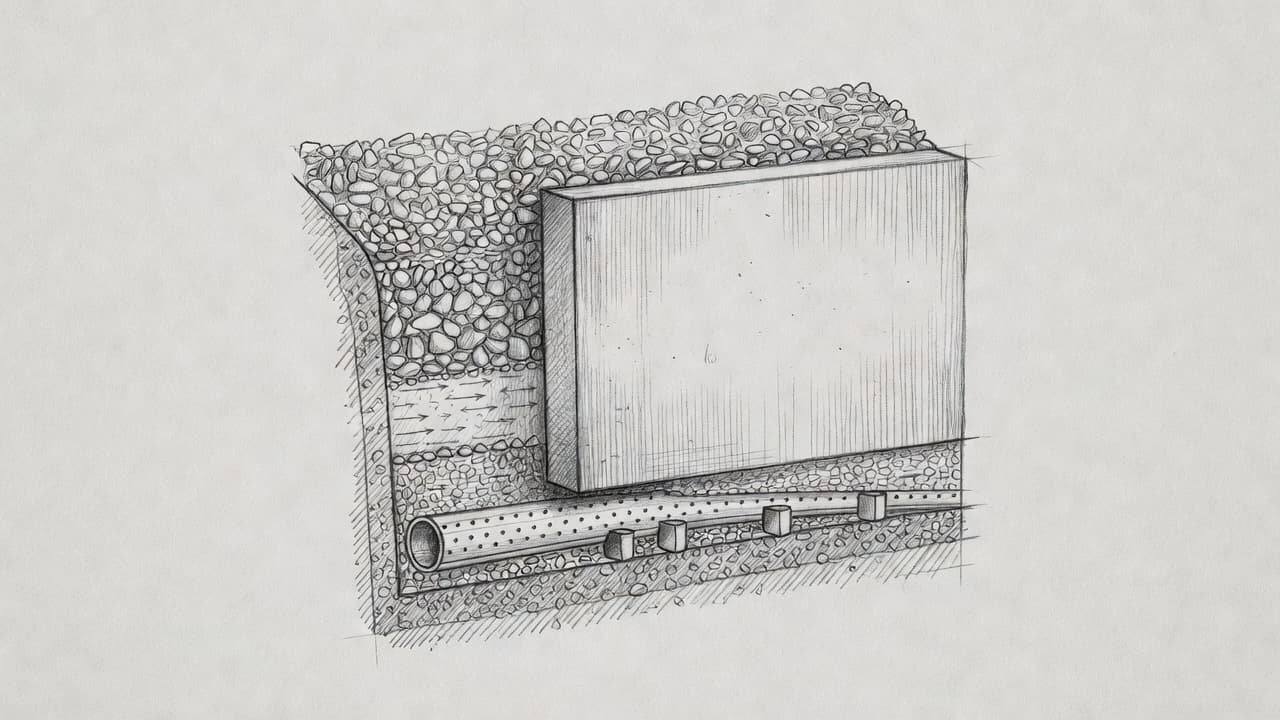 > A retaining wall is only as strong as the drainage behind it.
The job of weep holes, drain rock, and pipe
These parts work together to move water out before pressure builds. Weep holes give trapped water a way to escape through the wall face. Drain rock, often clear crushed stone, creates open space for water to move. A perforated pipe at the base collects that water and carries it to an outlet.
Many wall designs use 12 to 18 inches of crushed stone backfill and a 4-inch perforated drain pipe . Weep holes are commonly spaced every 6 to 10 feet, depending on the wall design. Filter fabric also helps by keeping fine soil from clogging the drainage stone.
Good installation matters as much as the materials. The pipe needs the right slope, the drain must daylight or connect to a proper outlet, and the backfill should stay free-draining. In rainy areas like Hillsboro, Beaverton, Aloha, and the rest of Washington County, that work can't be treated as an extra.
Signs your retaining wall already has drainage trouble
Trouble often shows up before failure. Watch for bowing, bulging, leaning sections, horizontal or stair-step cracks, wet spots at the base, soil washing out, or white mineral stains called efflorescence. Plants growing from joints can also point to constant moisture inside the wall.
Spring and fall are smart times to inspect, along with checks after major storms. If the wall looks different than it did last season, don't ignore it. Chozen Gardens can inspect the site, find where the water is coming from, and recommend repairs before the movement spreads to nearby patios, fences, or planting beds.
Why patios and hardscaping fail from below
Patios, walkways, paver paths, and concrete pads all depend on a stable base. When water gets underneath, that base can soften, shift, or wash away. The surface may still look fine at first, but the support below is already changing.
Then the symptoms start. Pavers sink or separate, concrete cracks, puddles linger after rain, and surfaces get slick with algae or grime. Mud gets tracked into outdoor living areas, and uneven spots become a safety issue.
How runoff, downspouts, and grading cause surface damage
Roof runoff is a common culprit. When a downspout dumps near a patio, the water pounds one area over and over. Slopes from lawns or planting beds can also send sheet flow across a hardscape surface, especially when the yard pitches the wrong way.
Poor grading makes everything worse. If a patio has low spots or bad pitch, water sits instead of draining off. If the surrounding beds hold water, the edge restraint and base stay wet. That combination can loosen joints, shift borders, and stain the surface.
A patio repair that ignores runoff is usually a short-term fix.
Drainage fixes that help hardscapes last longer
The right solution depends on the site. Some yards need regrading to move surface water away. Others need a trench drain across the edge of a patio, a French drain below grade, or downspout extensions that carry roof water farther from the hardscape.
In some cases, permeable pavers help by letting water pass through the surface into a prepared drainage base. On concrete jobs, an under-drain or better sub-base may be the missing piece. When drainage and hardscape problems overlap, it's smart to solve both at once.
Chozen Gardens handles that kind of work as one system. If your patio is settling, your wall is showing movement, or runoff is crossing the whole yard, their team can diagnose the cause and build a site-specific fix instead of patching symptoms.
Protect your yard before repairs pile up
Good drainage protects more than appearance. It helps retaining walls stay upright, keeps patios level, reduces repair costs, and makes the yard safer to use after rain.
If you're seeing cracks, leaning walls, standing water, or sinking pavers, now is the time to act. Chozen Gardens can inspect the problem, correct the drainage, and help with the retaining wall, patio, concrete, or hardscape repairs before a small water issue turns into a major rebuild.