
Landscaping 101: How to Design a Beautiful, Low-Maintenance Yard
You don't need a huge budget or endless weekend work to have a yard you enjoy. For busy homeowners in Washington County and nearby Portland-area communities, the real goal is simple: a yard that looks good in wet winters, handles dry summers, and doesn't turn into a second job.
A low-maintenance yard comes from smart planning. It uses fewer problem plants, simpler lawn areas, solid drainage, and materials that hold up over time. When the design matches your site and your schedule, the work drops fast. That's why thoughtful design matters more than constant upkeep.
Start with a simple plan that fits your yard and your time
The best low-maintenance landscaping starts before you buy plants, gravel, or pavers. In the Pacific Northwest, that matters even more because your yard has to handle months of rain, then long dry stretches in summer.
Look at sunlight, drainage, and traffic before you buy anything
Walk your yard after a hard rain. Notice where water sits, where soil stays soggy, and where runoff moves. Those clues tell you where drainage work may come first.
Also watch the light. Some spots bake in afternoon sun, while others stay shaded for most of the day. If you put the wrong plant in the wrong place, you'll spend years watering, pruning, and replacing it.
Traffic matters too. Look for the routes kids, pets, and guests already use. Those paths often turn into mud or worn grass. When you plan for real movement, the yard stays cleaner and works better.
For grading issues, drainage fixes, or a full redesign, professional help is worth it. A good plan up front can save a lot of money later.
Break the yard into easy-care zones
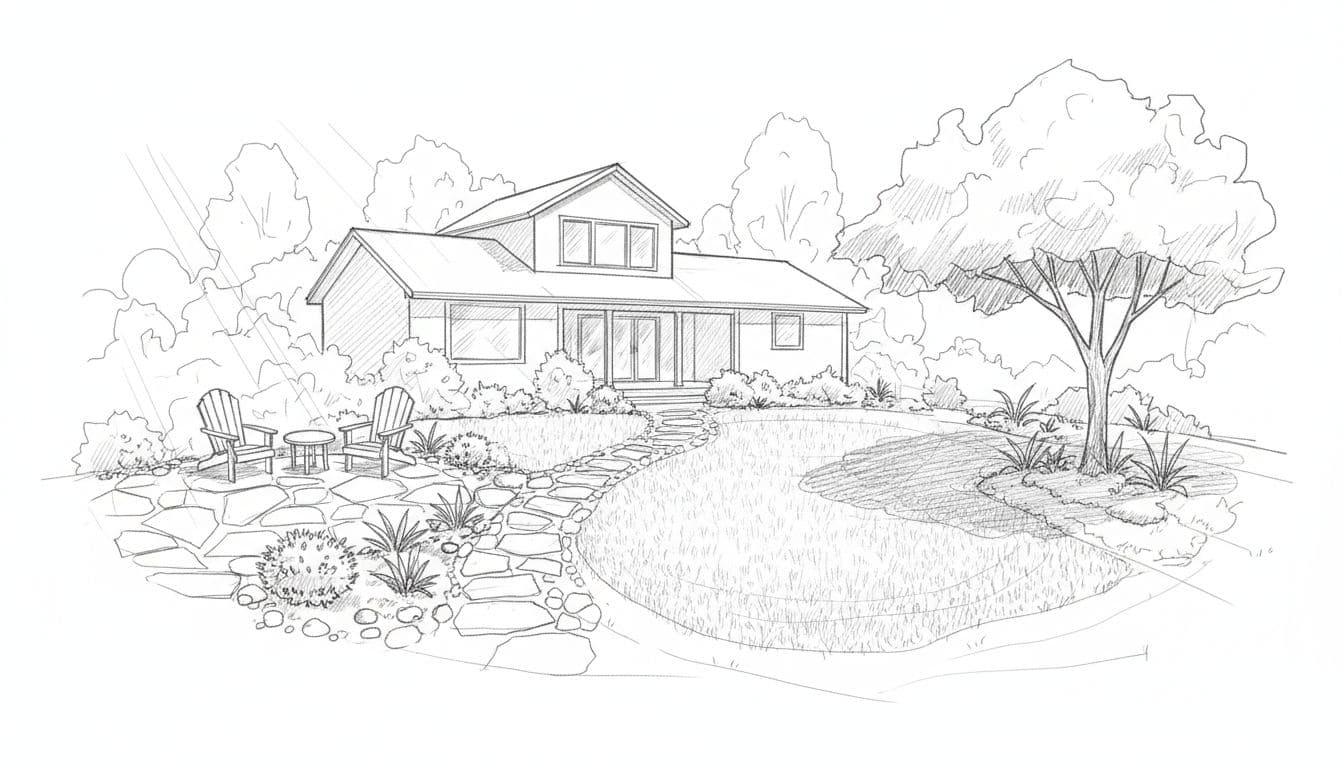
Once you understand the site, divide the yard into a few clear zones. Most suburban homes do well with a patio or seating area, one or two planting beds, a path, and a smaller lawn or play space.
This step cuts clutter. It also helps you avoid the common mistake of trying to make every inch do everything. A tidy layout is easier to mow, easier to mulch, and easier to keep looking finished.
Good zoning also helps with budget. You can improve one area at a time instead of tearing out the whole yard at once. Many homeowners start with the space they use most, then build out from there.
Choose plants and lawn alternatives that do more work for you
Plant choice shapes your workload more than almost anything else. In 2026, many Oregon homeowners are choosing native plants, pollinator-friendly beds, microclover, and eco-turf mixes because they look good without demanding much.
Pick tough plants that thrive in Oregon with less watering and fuss
Oregon natives and well-adapted plants usually need less help once they settle in. They already know how to handle our rain, clay soil, and summer dry spells.
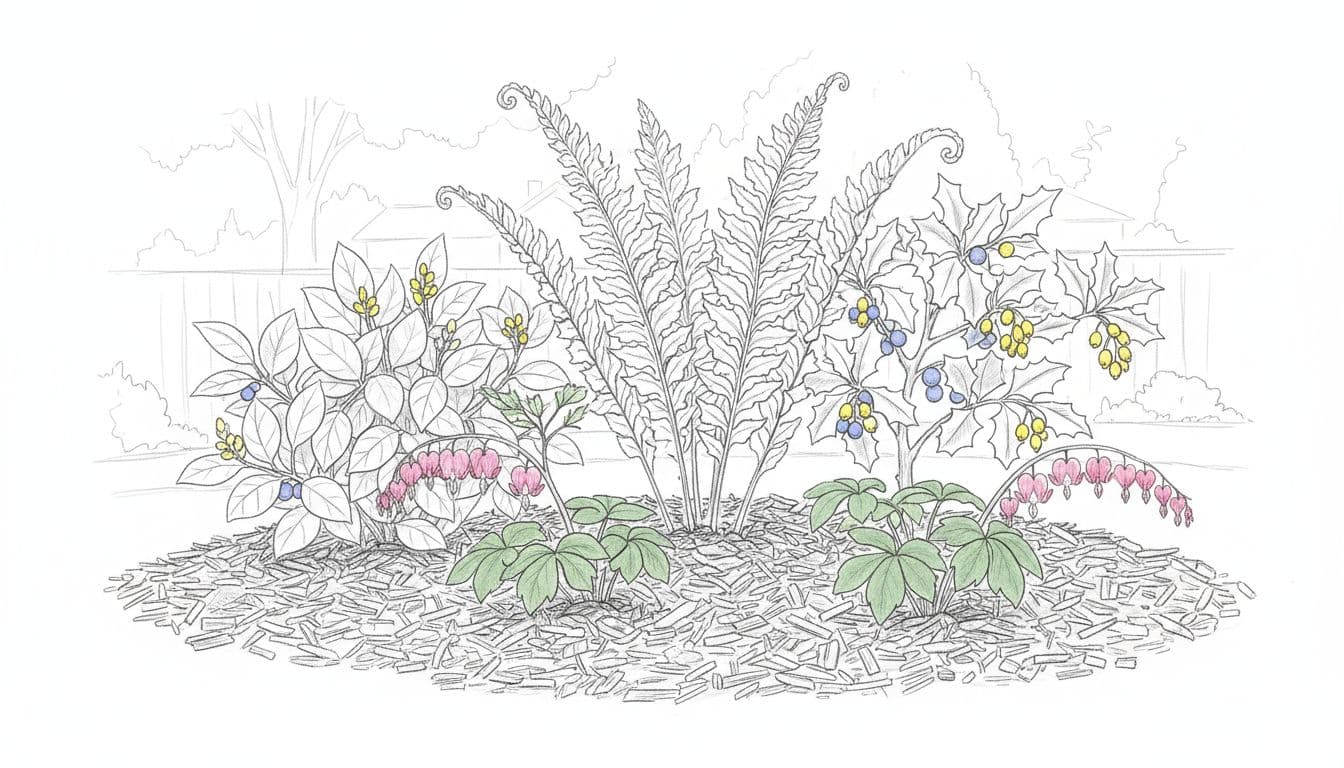
A short, practical plant list goes a long way. Sword fern, salal, Oregon grape, and Pacific bleeding heart are strong choices for many Washington County yards. They bring texture, seasonal color, and better staying power than many fussy ornamentals.
Mulch helps just as much as the plants themselves. A thick mulch layer holds moisture, slows weeds, and protects roots during heat. That means less watering and less time bent over pulling crabgrass.
Use less lawn, or swap part of it for smarter ground covers
Lawns often create the most weekly work. They need mowing, edging, feeding, patching, and, in summer, more water than many people want to use.
Cutting lawn size is one of the fastest ways to lower maintenance. You don't have to remove all of it. Start with one trouble spot, such as a narrow side yard, a shady patch under trees, or an area that always turns muddy.
Microclover is getting more attention because it stays green longer and can use much less water than standard grass. Eco-turf mixes and native grass blends also work well in play areas or open spaces that still need a soft surface. For other spots, mulch beds and simple plant groupings are often the easiest answer.
Add hardscaping and smart systems to cut down weekly chores
Low-maintenance landscaping is not only about plants. Patios, paths, edging, lighting, and irrigation can save time every week while making the yard easier to use.
Choose durable surfaces that stay neat in wet weather
In Oregon, muddy traffic areas wear out fast. A solid path or patio keeps feet out of the mud and protects nearby planting beds.
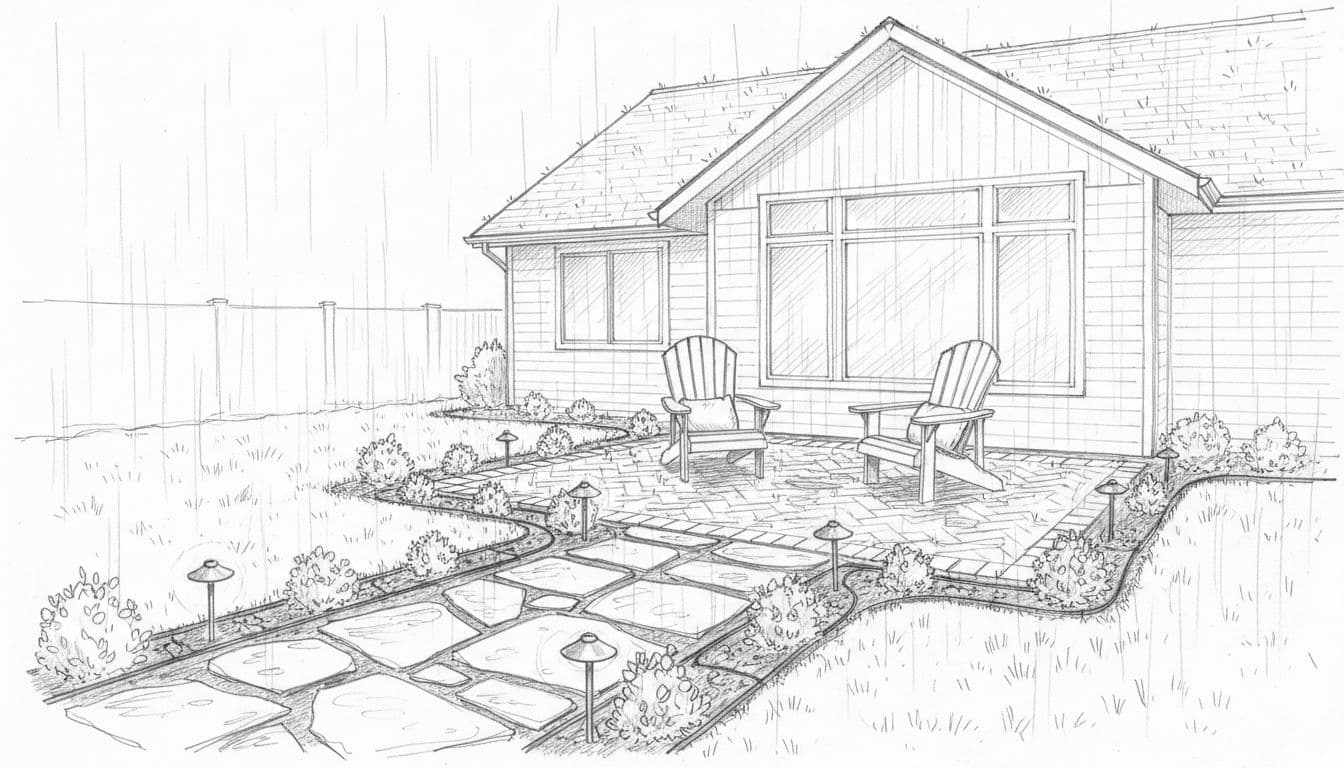
Permeable pavers are a smart choice because they let water move through instead of pooling on top. Concrete walkways are simple, durable, and easy to sweep. Natural stone looks softer and blends well with planting beds. Composite decking can also reduce upkeep around seating areas because it doesn't need the same level of care as wood.
Simple edging helps more than many people expect. It keeps mulch in place, creates cleaner lines, and slows grass from creeping into beds.
Install irrigation and lighting that save time all year
Smart irrigation can make a big difference during dry months. Systems that adjust for weather help reduce waste and keep plants healthier without constant hose work.
Drip irrigation is especially useful for planting beds and raised gardens. It sends water where roots need it, instead of soaking paths and patios. That means fewer weeds and less runoff.
Lighting adds another low-effort upgrade. A few well-placed path lights or accent lights improve safety, boost curb appeal, and help you enjoy the yard after dark. For irrigation, drainage, concrete, lighting, or a full yard update, a local crew like Chozen Gardens can connect all the pieces so the finished yard works as well as it looks.
A beautiful yard usually comes from better choices, not more chores. Low-maintenance landscaping works best when the plan fits your site, the plants fit Oregon weather, and the hard surfaces solve real problems.
If the whole project feels like too much, start with one or two changes. Homeowners in Hillsboro, Beaverton, Aloha, Washington County, and nearby Portland-area communities can contact Chozen Gardens for help with landscape design, drainage, hardscaping, raised beds, lighting, or a full yard upgrade.