Can Tree Roots Damage Driveways, Sidewalks, Patios, and Foundations?
Can tree roots damage driveways, sidewalks, patios, and foundations? Yes, but roots most often lift and crack flat concrete surfaces rather than break through a sound foundation.
Roots follow loose soil, air, and moisture, all of which can collect near slabs. Soil movement, drainage, tree size, and shallow construction also affect the risk. Early inspection helps you choose a repair that protects both your property and the tree.
Can Tree Roots Damage Driveways, Sidewalks, Patios, and Foundations?
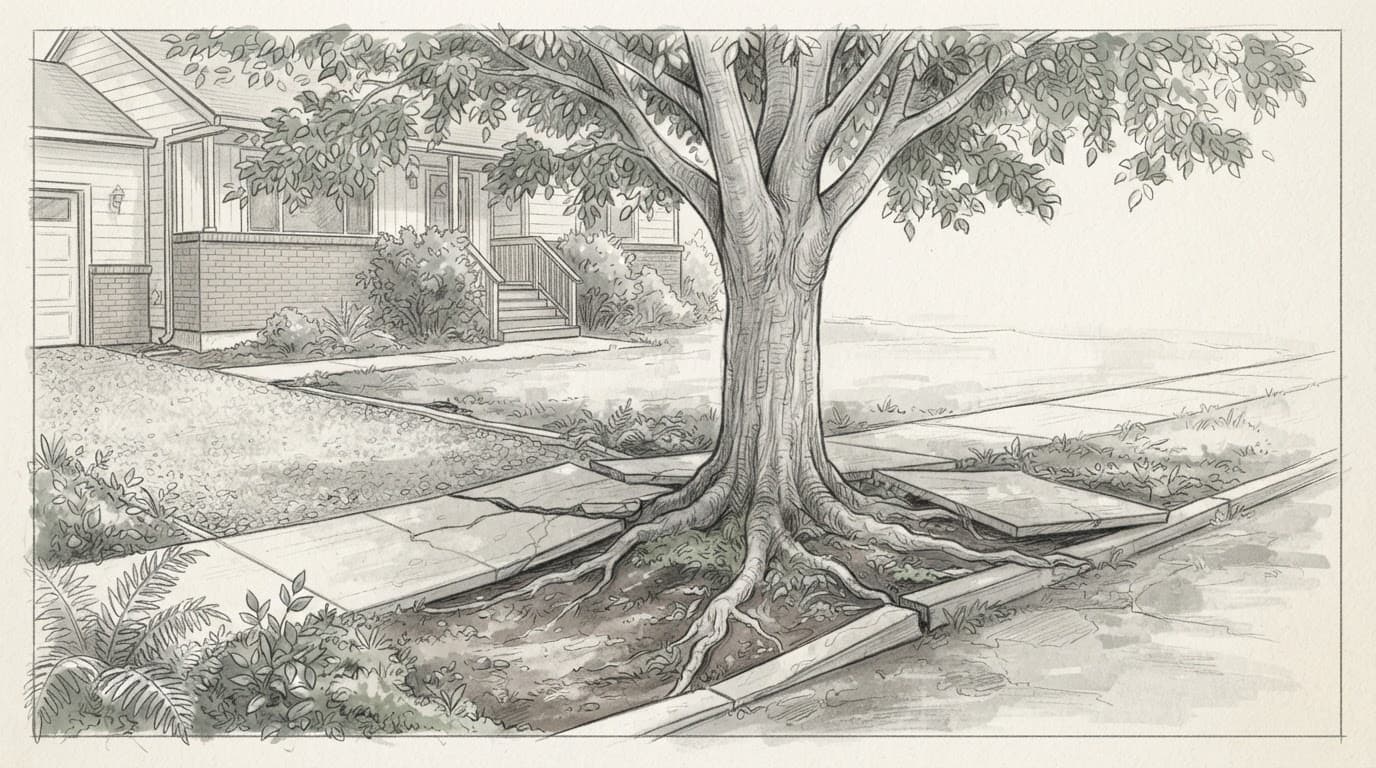
Tree roots expand slowly, but they can move concrete over time. Roots often grow under slab edges and joints because those areas offer oxygen, water, and easier paths through soil. As a large root thickens, it can lift a panel like a wedge under a door.
Flatwork damage is common around established trees. Foundation damage is less common and usually involves other problems, such as shallow footings, poor drainage, shifting soil, or cracks that already existed.
A healthy, deep foundation usually resists roots. However, roots near an already compromised foundation can worsen soil drying, drainage changes, or existing cracks. Tree removal isn't always the first answer. Removing a mature tree without assessing the site can create stability and soil-moisture concerns of its own.
How Roots Affect Each Type of Property Surface
Sidewalk panels can rise or tilt where roots grow beneath them, creating a trip hazard. This is especially common beside street trees and mature yard trees.
Driveways often crack near their edges, expansion joints, and thinner sections. Patios can become uneven, which may affect furniture, drainage, and the way water moves away from the house.
Foundation concerns deserve a closer look, but a nearby tree alone doesn't prove the cause. Watch for changes in soil grade, moisture, and cracks rather than assuming every exposed root is a structural threat.
The Warning Signs Homeowners Should Not Ignore
Look around the tree and along nearby concrete for:
- Raised slabs, tilted panels, or new gaps along concrete edges.
- Widening cracks in a driveway, patio, walkway, or foundation.
- Exposed roots, displaced soil, or water collecting where it did not before.
- Sticking doors or windows paired with new foundation cracks.
One sign doesn't identify the cause. Avoid cutting roots based on appearance alone, because the wrong cut can damage the tree or create a fall hazard. A sidewalk disrupted by a street tree can also create a public safety issue in Portland, so don't put off an inspection.
Safe Ways to Prevent and Repair Tree Root Damage
The best time to prevent conflicts is before planting. Choose a tree that fits the available space at maturity, and keep it far enough from sidewalks, patios, driveways, and structures.
Approved root barriers can help in the right location, although they need proper placement and depth. Regular watering also matters. Portland recommends consistent watering for newly planted trees and deep-root watering during the dry season, which supports healthier root development.
For an existing tree, the right repair depends on the root size, tree condition, and surface damage. Options may include careful root pruning, drainage changes, selective concrete replacement, flexible paving, or creating more open soil around the tree.
A concrete repair that ignores the roots may crack again. A root cut that ignores the tree may create a much larger safety problem.
Why Cutting Roots or Removing the Tree Can Backfire
Large roots anchor a tree and move water and nutrients. Cutting them can cause decline, decay, disease entry, or failure during wind and winter storms. Removing roots from one side of a mature tree may make that tree unstable.
Oregon State University Extension advises protecting the critical root zone during construction. Most roots over 4 inches wide are likely structural roots, and OSU advises against cutting them.
Removal can be appropriate when a tree is hazardous or beyond recovery. Still, it may leave a stump, alter soil moisture, and fail to solve the underlying drainage or concrete issue. An arborist should assess the tree before anyone starts digging.
Portland Permits and Professional Help for Root Pruning
Portland has extra rules for street trees and public right-of-way work. For a street tree, root pruning at or above one-quarter inch at the attachment point requires Urban Forestry approval.
During sidewalk repairs, homeowners must first apply for a Portland Bureau of Transportation sidewalk permit. Portland Urban Forestry can inspect exposed roots and mark the roots that may be cut. The City recommends hiring a certified arborist for this work.
Private-property requirements can differ, so confirm the rules before work begins. Chozen Gardens is licensed, bonded, and insured, with ISA-certified arborist care for Portland-area properties. The team can assess roots, tree condition, drainage, and repair needs before recommending pruning, removal, or concrete work.
When to Call Chozen Gardens Before the Damage Gets Worse
Call Chozen Gardens if a tree is lifting a sidewalk, driveway, patio, or walkway. Also call before cutting roots near a mature tree or starting excavation within its critical root zone.
Foundation cracks near large trees need prompt attention, especially if you also notice uneven soil, drainage changes, or doors that have begun sticking. A property assessment can separate cosmetic slab damage from a tree-stability or structural concern.
Chozen Gardens provides risk assessments, pruning, removal, stump grinding, drainage solutions, concrete patios, and landscaping across Portland and Washington County. Contact the team for a careful plan that fits your yard, your tree, and local requirements.
A Safer Way to Handle Root and Concrete Problems
Tree roots most often damage flatwork by lifting or cracking it. Foundation problems are less common, but they need a closer inspection when cracks, drainage changes, and large nearby trees appear together.
Don't trade a damaged sidewalk for an unstable tree. Before pruning roots, replacing concrete, or removing a tree, contact Chozen Gardens for a practical assessment and a safe solution for your Portland-area property.