
Concrete Repair vs. Replacement: When Should You Replace Cracked Concrete?
Every concrete crack can look alarming, yet many narrow, stable cracks can be repaired before they spread. The choice between concrete repair vs. replacement depends on more than crack width.
Movement, drainage, settlement, surface damage, and the portion of slab affected all matter. For patios, walkways, steps, and other Portland-area concrete, Chozen Gardens can inspect the surrounding property and help you choose a practical, lasting solution.
Concrete Repair vs. Replacement: How to Choose for Cracked Concrete
A crack is only one clue. First, ask whether the slab still drains water, sits level, and provides a safe walking surface. A thin crack in a stable patio calls for a different response than a sinking walkway near a downspout.
Minor concrete repair can include cleaning a crack, applying sealant, filling gaps, or patching small damaged areas. Replacement involves removing failed concrete, correcting the base or grade, and pouring a new section.
Exterior cracks deserve attention because Portland has a long wet season. The National Weather Service reports that nearly 90% of the area's annual rainfall falls between mid-October and mid-May. Water can enter open cracks, weaken the supporting base, and worsen damage during occasional freezing conditions.
Cracks That Can Often Be Repaired
Hairline or narrow cracks often respond well to repair when they are dormant and the slab edges remain even. The concrete should feel solid underfoot, without rocking, sinking, or holding water along the crack.
Sealing limits water entry, while patching can improve small spots of flaking or shallow surface damage. However, a clean-looking repair does not fix poor grading, unstable soil, or a failing gravel base below the slab.
After repair, watch the area through changing weather. Widening cracks, fresh separation, or recurring surface damage point to continued movement that needs a closer inspection.
Warning Signs That Point to Replacement
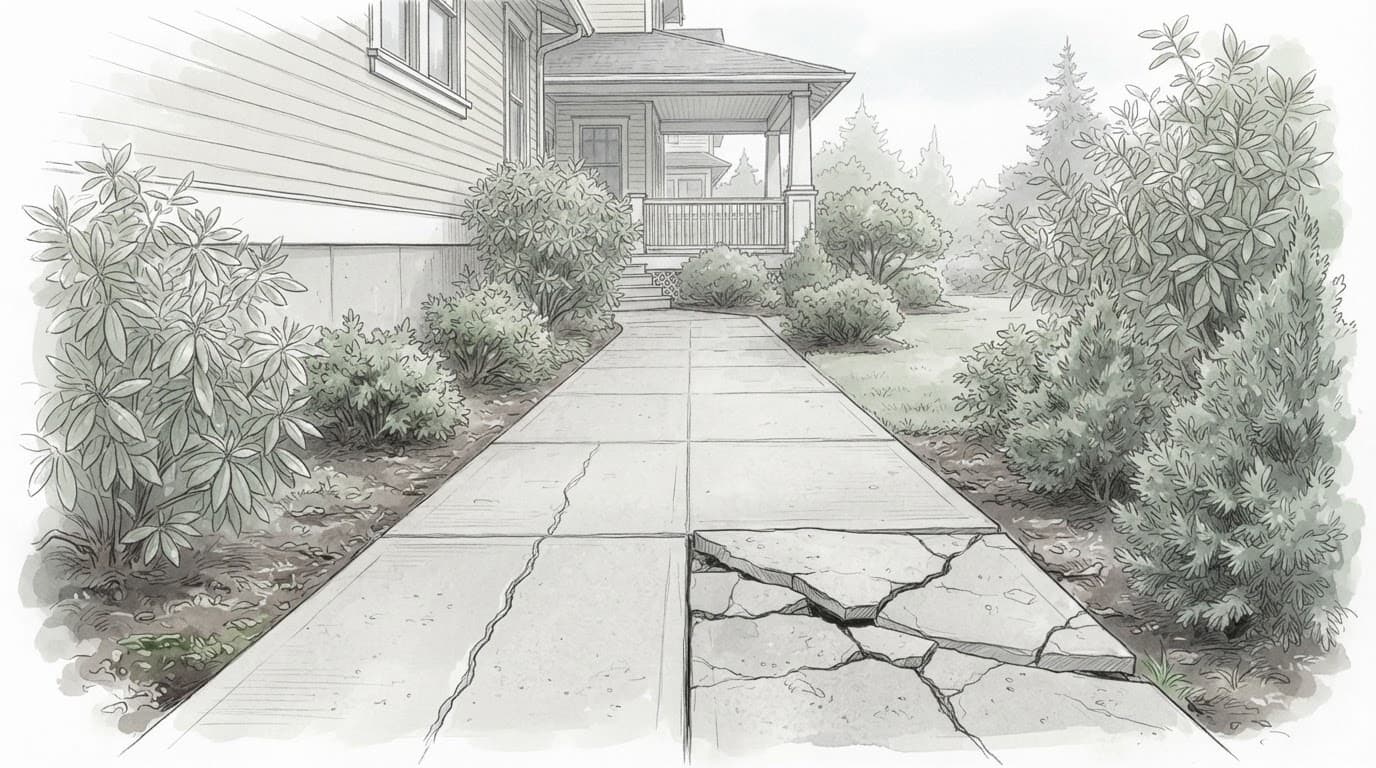
Replacement becomes more likely when cracks are wider than roughly one-quarter inch, run through the slab, or continue to widen. Vertical displacement is another serious sign, especially when one edge sits higher than the other.
Look for sunken sections, heaved concrete, repeated trip hazards, widespread spalling, crumbling edges, exposed reinforcing steel, or rust stains. Damage across a large share of a patio or walkway can also mean the slab has lost reliable support.
These conditions often trace back to movement, saturated soil, poor compaction, or deeper concrete deterioration. Depending on the site, Chozen Gardens may recommend partial replacement, base stabilization, drainage work, or replacing the full slab.
How Drainage, Soil, and Slab Movement Affect Concrete Damage
Repairing only the visible crack can leave the real problem below ground. In Portland and Washington County, rainwater often reaches concrete through overflowing gutters, downspouts that discharge too close to a slab, and soil that slopes toward a garage or home.
As water moves beneath concrete, it can wash out fine soil or weaken the compacted base. The slab may then settle, tilt, or crack under its own weight and everyday foot traffic. Intermittent freezing can add pressure when water remains inside cracks or beneath damaged concrete.
Before deciding on concrete repair vs. replacement, inspect the slope around patios, walkways, and steps. Check joints, nearby roots, runoff paths, and the soil along slab edges. Drainage corrections may need to happen before concrete work, or alongside it.
Check for Pooling Water and Uneven Concrete
Walk the area after a steady rain. Puddles, low spots, exposed gravel, washed-out soil, and water near a foundation all deserve attention.
Concrete should direct water away from structures. If a walkway or patio slopes toward the house, moisture can collect where it causes the most trouble. One slab edge sitting higher than the next also suggests movement rather than a simple cosmetic crack.
Uneven concrete creates a trip risk for family members and visitors. Correcting drainage and support issues helps prevent the same damage from returning after repairs.
Why Portland's Wet Climate Makes Early Repairs Matter
Portland's summers are dry, but wet weather dominates much of the rest of the year. The area's mild winters can still bring intermittent freezing, freezing rain, and repeated moisture exposure.
Small cracks can hold water long before they look severe. Addressing cracked sealant, blocked drains, gutter overflow, and leaking downspouts before the next wet season can slow further damage. Early evaluation also helps avoid covering up symptoms while water continues to undermine the slab.
What Happens During a Professional Concrete Evaluation
A careful evaluation starts with the whole site, not only the broken area. Chozen Gardens can document crack locations, width, direction, and signs of active movement. The inspection also checks slab height differences, spalling, crumbling edges, and drainage patterns.
Nearby tree roots, soil conditions, and water discharge points matter as well. A straightedge or level can reveal uneven areas that are easy to miss at a glance. Measurements across the slab, visual water-flow checks, and joint inspections help identify why damage occurred.
The findings guide the recommendation. A stable crack may need sealing or patching. A localized failure may call for partial replacement. When the base, drainage, or slab condition has failed across a larger area, full replacement may be the sounder choice.
Questions to Ask Before Approving the Work
Before scheduling work, ask clear questions about the cause and the proposed fix:
- Is the crack stable, or does it show active movement?
- Is water reaching or washing out the base beneath the concrete?
- Does the slab create a trip hazard or direct water toward the home?
- Can this section be repaired without hiding a larger problem?
- Will the plan address grading, downspouts, roots, or soil support?
Also ask how the finished concrete will drain and how it will fit the yard's existing layout. A good recommendation addresses the damaged surface and the conditions around it.
A Sound Choice Starts Below the Surface
Narrow, stable cracks without displacement are often good candidates for repair. Active cracks, uneven slabs, standing water, and widespread deterioration usually call for replacement or deeper site work.
Crack width matters, but it is only one part of the decision. Portland-area and Washington County homeowners can contact Chozen Gardens for a careful evaluation of their concrete, drainage, and surrounding property.