Choosing the Right Material for Your Retaining Wall Project
A retaining wall holds soil in place, helps shape a sloped yard, and can protect your landscape from erosion. The hard part is choosing a material that won't struggle once rain, runoff, and wet ground start pushing against it.
That matters even more in the Portland metro area, where long wet seasons and heavy soil can shorten a wall's life. The right retaining wall material has to balance looks, drainage, strength, and cost. If you want a clear answer for your property, Chozen Gardens can inspect the site and help you avoid an expensive mistake.
Start with the job your retaining wall needs to do
The best material depends on function first. A short wall that frames a garden bed has light demands, while a taller wall holding back a slope carries real pressure. Wall height, soil type, slope, and water flow all affect the choice. As those demands rise, planning matters more, and professional help often makes the difference between a wall that lasts and one that starts leaning.
Decorative walls need different materials than structural ones
A small decorative wall gives you more freedom. For example, you might choose tumbled concrete block, natural stone, or even timber because the wall mostly adds shape and style. In that case, appearance can lead the decision.
A structural wall has a different job. If it's holding back deep soil near a driveway, patio, or fence line, strength comes first. Taller walls usually need stronger materials, a better base, and careful layout. When a wall protects usable space, don't pick a material only because it looks good in a photo.
Why drainage and soil pressure matter before you pick a material
Water is often the real problem behind a failed wall. When rain soaks the soil, that wet soil gets heavier and pushes harder. If water gets trapped behind the wall, pressure builds over time and can crack, bow, or shift the structure.
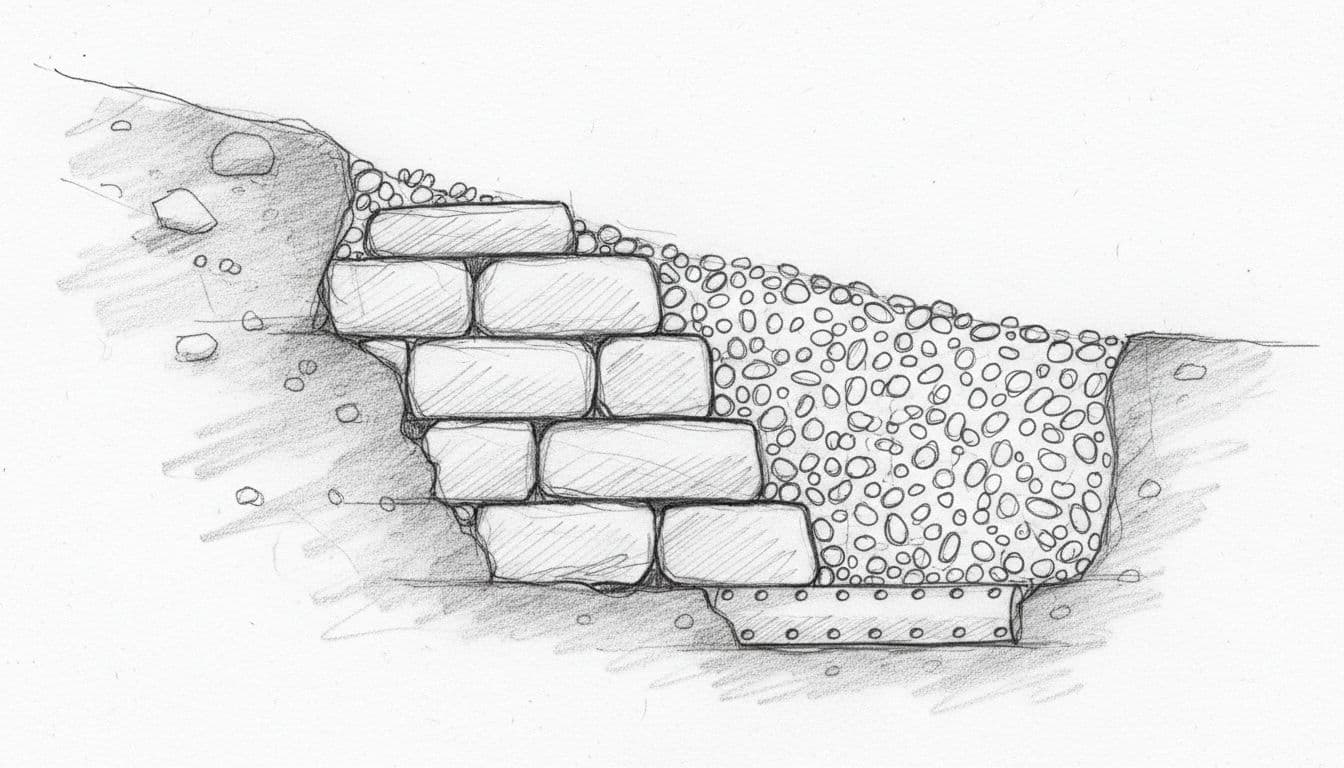
Portland's climate makes drainage non-negotiable. A good wall needs gravel backfill, a drain pipe, and a path for water to escape. The material still matters, but it has to work with that drainage system.
In wet soil, poor drainage can ruin a strong wall faster than a weak material ever could.
Compare the most common retaining wall materials
Most homeowners end up choosing between a few common options. Each one can work, but each fits a different site, budget, and look.
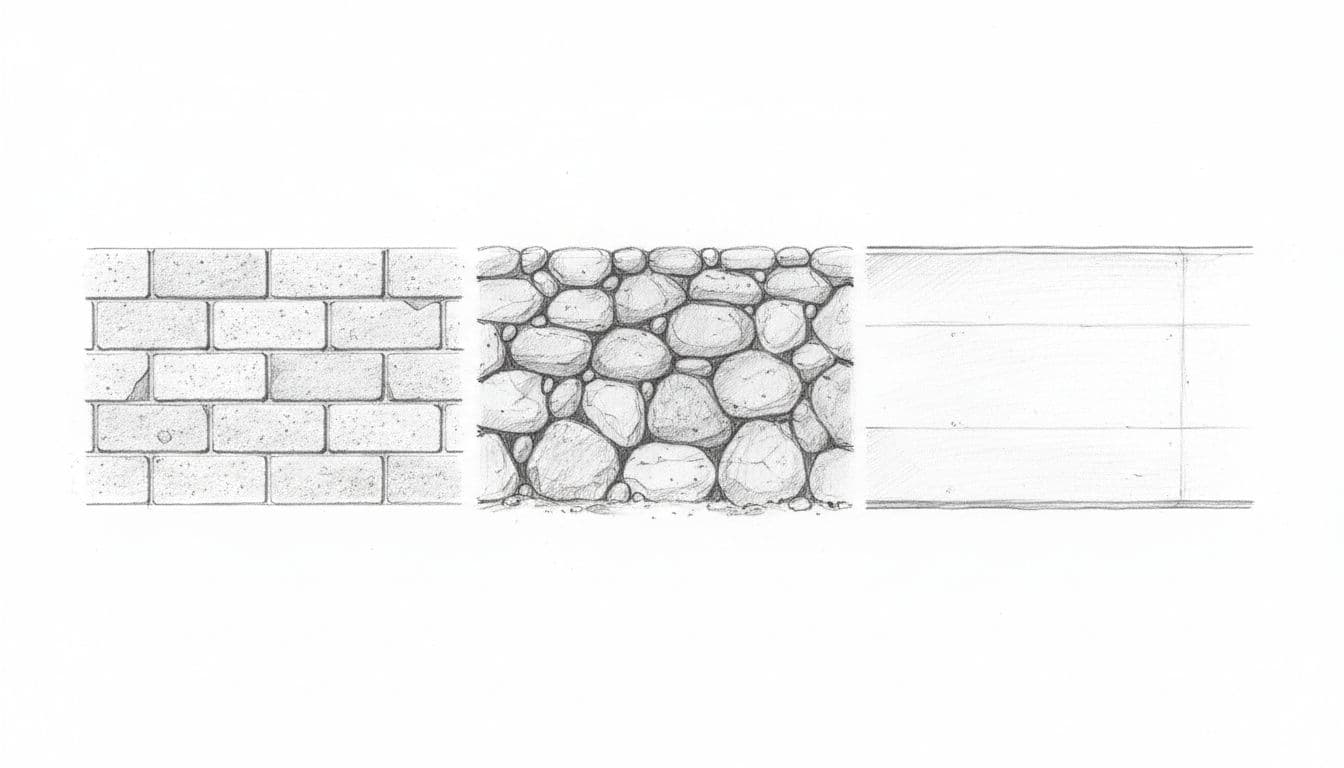
Concrete blocks are a strong all-around choice for many homes
Concrete blocks are popular because they balance strength, cost, and appearance. Interlocking systems work well in wet climates when the base is solid and drainage is built in. They also come in several finishes, so you can keep the look simple or more polished.
For many Portland-area yards, block is the safest middle-ground choice. It's dependable, easier to repair than poured concrete, and often more budget-friendly than stone.
Natural stone gives a timeless look, but costs more
Stone has a look that concrete can't fully copy. It blends well with gardens, older homes, and wooded lots, and it can last a long time when installed well. If you want the wall to feel like part of the landscape, stone is hard to beat.
The tradeoff is price. Stone is heavier, labor costs are higher, and the work usually takes more skill. It's a good fit when appearance matters as much as performance.
Poured concrete is best for heavy-duty support
Poured concrete is a strong option for taller walls or sites with bigger loads. It has a clean look, needs little upkeep, and handles demanding conditions well when built with good footings and drainage.
Still, it costs more up front, and poor installation can lead to cracking. That's why site prep and workmanship matter so much with this material.
Wood can be affordable, but it may not last as long in wet weather
Wood has a warm, familiar look, and it can cost less at the start. For short garden walls or lower-pressure areas, it may make sense if budget is tight.
In the Pacific Northwest, though, moisture is hard on timber. Even treated wood can rot, warp, or attract insects over time. If you choose wood, do it with open eyes and a shorter lifespan in mind.
Gabion walls drain well and work in problem spots
Gabion walls use wire cages filled with rock. Because water moves through them easily, they can work well in erosion-prone areas or places where drainage is tough. They also handle uneven ground better than some rigid wall types.
The main drawback is appearance. Gabions have a rough, industrial look, so they don't match every home or front yard. In the right setting, though, they're practical and long-lasting.
Choose the material that fits your budget, style, and maintenance goals
Price matters, but the first estimate doesn't tell the whole story. The right choice is the one you can afford to build well and live with for years.
Think about the full cost, not just the first estimate
A retaining wall budget includes more than the face material. You also pay for excavation, base prep, drainage, labor, and cleanup. If a low-cost wall skips those parts, the savings can disappear fast when repairs show up.
Spend more for durability when the wall protects a slope, supports a patio, or sits near your home. On the other hand, a shorter garden wall may not need the most expensive option. The goal is a wall that fits the risk.
Match the wall to your yard's look and your upkeep preferences
Some homeowners want a natural look that blends into planting beds. Others want a neat, low-maintenance wall that stays clean with little effort. Concrete block and poured concrete are often easier to maintain, while stone brings more character, and wood feels softer but ages faster.
Pick a material you won't get tired of seeing. After all, a retaining wall is part of your yard every day, not a detail you notice once and forget.
Why a local pro can save you time, stress, and repairs
Even the best material can fail with poor grading, weak base prep, or bad drainage. That's why local site knowledge matters so much in the Portland metro area, where wet soil changes the whole job.
Chozen Gardens helps homeowners choose the right retaining wall material, plan drainage, and build the wall the right way. The company is licensed, bonded, and insured, and it works across the Portland metro area. That local experience helps when a site has runoff issues, soft ground, or a slope that needs careful grading. If you want a quote or site visit before you commit, call Chozen Gardens.
Conclusion
The best retaining wall material depends on the wall's job, your soil, and the amount of water moving through your yard. In Portland, wet weather changes the math, so drainage and installation quality matter just as much as the material itself.
If you're weighing block, stone, poured concrete, or wood, Chozen Gardens can help you choose with confidence. Call for a quote or site visit, and get a wall that looks good, drains well, and holds up for years.