
Concrete vs. Pavers: Which Is Better for Your Driveway or Patio?
Should you choose concrete or pavers for a new driveway or patio? For many homeowners in Washington County and the Portland metro, that choice affects more than looks.
In a wet climate, the right surface can change how water drains, how slippery the area gets, and how much repairs cost later. Concrete usually wins on upfront price. Pavers often win on lifespan and easier repairs. The better pick depends on your budget, your style, your drainage needs, and how long you plan to stay in the home.
The short version is simple: concrete usually saves money now, while pavers often save headaches later.
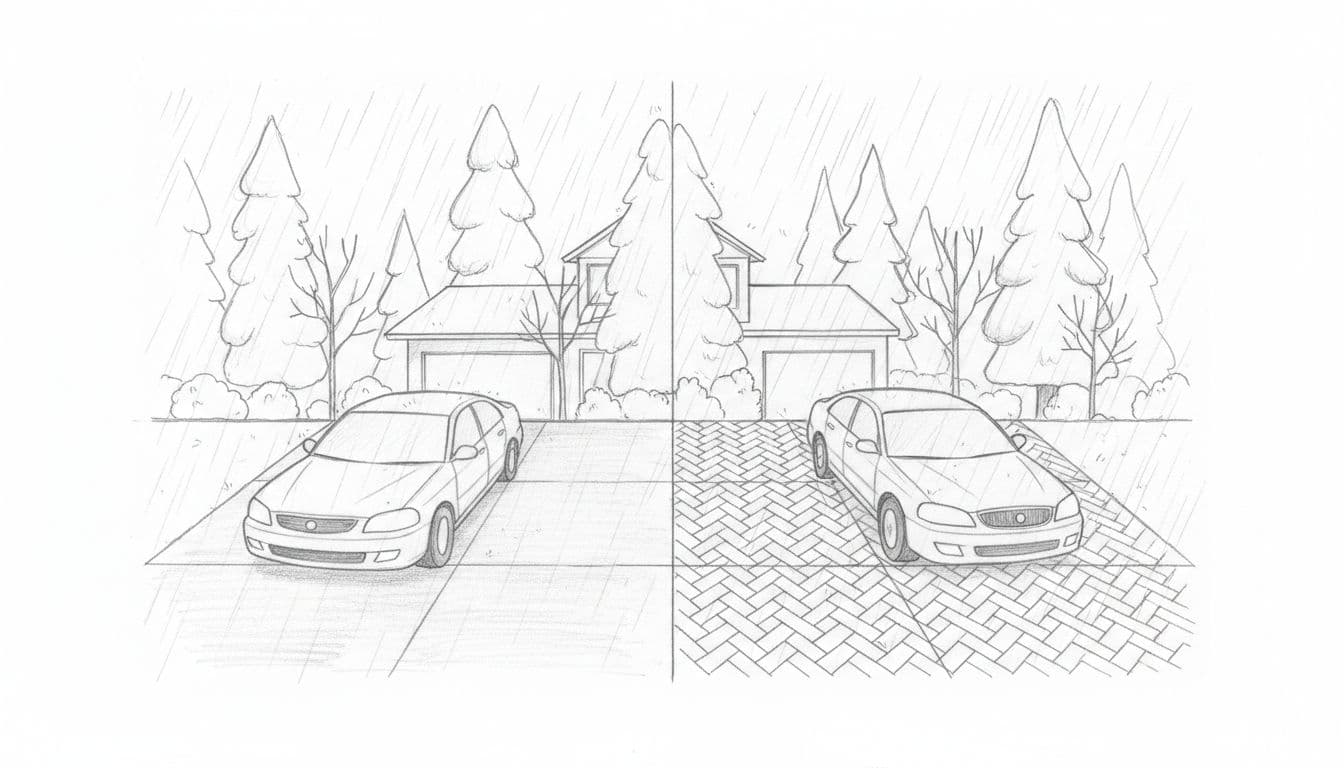
Upfront price is lower with concrete, but repairs can cost more later
A plain concrete slab is often the budget-friendly choice, especially for a large driveway. If you want a clean look and need to control costs, concrete makes sense. It also installs faster on many projects.
The downside shows up with age. Concrete can crack, stain, or settle, and those repairs rarely blend in well. A patched slab often looks patched. If one section fails badly, you may need to replace a much larger area than you expected.
Stamped or colored concrete can improve the look, but it also raises the price. At that point, the gap between concrete and pavers starts to shrink.
Pavers cost more at first, but they usually last longer and are easier to fix
Pavers cost more because the install takes more labor and a stronger base. Still, many homeowners choose them because they hold up well over time and give the surface a more finished look.
If one paver cracks or settles, a contractor can lift that small area, fix the base, and reset it. That repair is usually faster and far less noticeable than a concrete patch. For patios and driveways you plan to keep for years, that flexibility matters.
If you're staying in your home long term, pavers often bring better value even with the higher starting price.
Which material works better in Oregon weather and everyday use
Rain changes this decision. In Hillsboro, Beaverton, Aloha, and nearby areas, a driveway or patio has to handle wet months, muddy edges, and steady wear from cars, grills, patio furniture, and foot traffic.
That means climate should shape your choice as much as budget or style.
Why drainage matters more than most people think in the Pacific Northwest
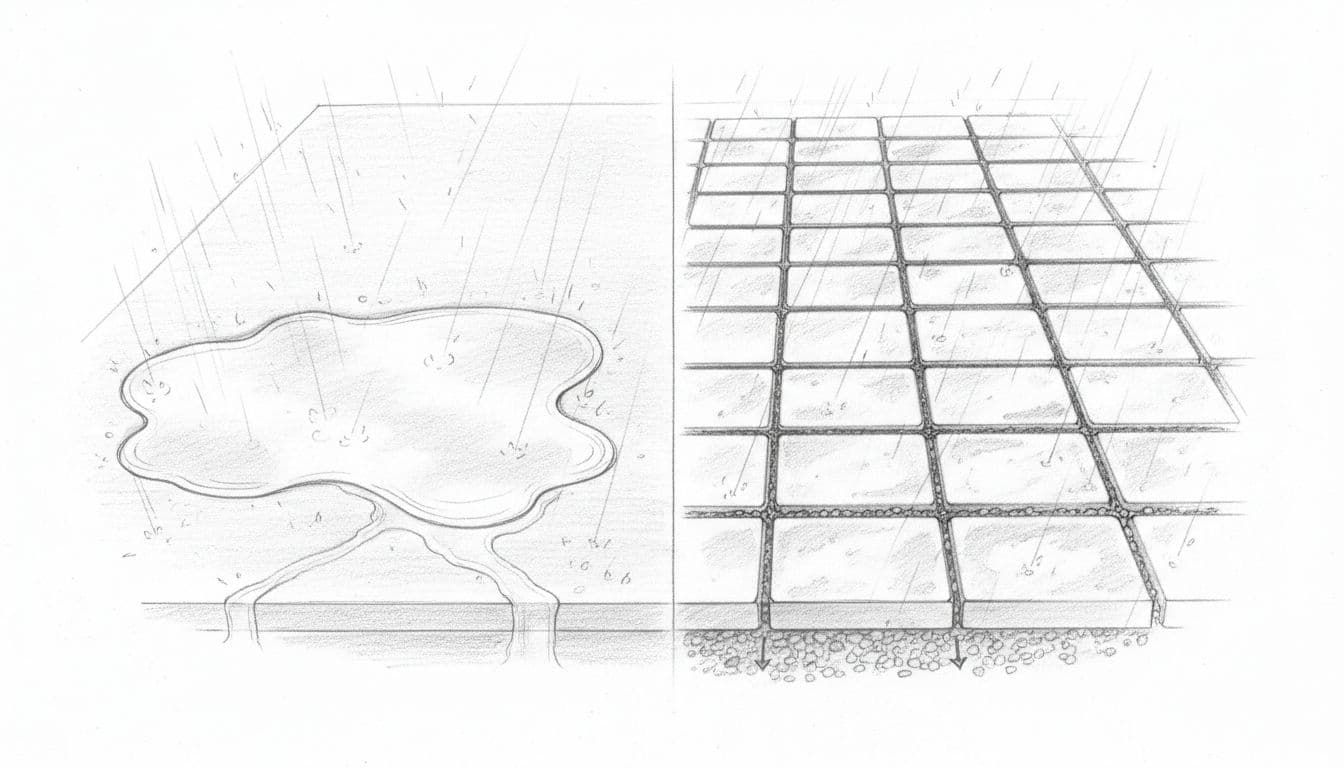
Frequent rain can cause puddles, runoff, slick spots, and water moving toward the house. Concrete is a solid surface, so it needs the right slope and, in many yards, extra drainage planning. If the grade is off, water has nowhere good to go.
Pavers handle water better because rain can move through the joints more naturally. That doesn't make every paver patio "drainage-ready," but it does give water more paths to escape. On wet or sloped properties, that can be a big advantage.
If water already pools near your garage or patio door, the surface alone won't solve it. The base, slope, and drainage plan matter just as much.
That is where local site knowledge helps. Chozen Gardens works on both hardscape surfaces and drainage solutions, which matters in neighborhoods where runoff can damage more than the driveway.
Cracking, shifting, and surface wear, what to expect over time
Concrete tends to crack as one slab. In wet conditions, soil movement and freeze-thaw cycles can speed that up. Even when the crack is small, it can spread and become more visible over time.
Pavers can shift too, especially if the base was rushed or too shallow. Still, they usually flex better than a slab. That means the problem often stays in one section instead of affecting the whole surface.
In both cases, base prep is the part you don't see, and it's often the part that matters most. A skilled install can add years to the life of either option.
How to choose the right option for your home and when to call a pro
The best surface depends on how you use the space. A workhorse driveway has different needs than a backyard patio where friends gather all summer. Your lot also matters. Drainage, slope, soil movement, and existing water issues can change the answer fast.
That is why a site review often saves money before the first shovel hits the ground.
Choose concrete if you want a simpler look and a lower starting price
Concrete is a strong fit for straightforward driveways, rental properties, and homes where budget comes first. It also works well when you want a smooth, simple look that doesn't compete with the rest of the yard.
If you want more style, decorative concrete is an option. Still, it can crack over time, and repairs are harder to hide. For homeowners who want the lowest initial cost and a clean finish, concrete is often the practical choice.
Choose pavers if you want better drainage, more style, and easier long-term maintenance
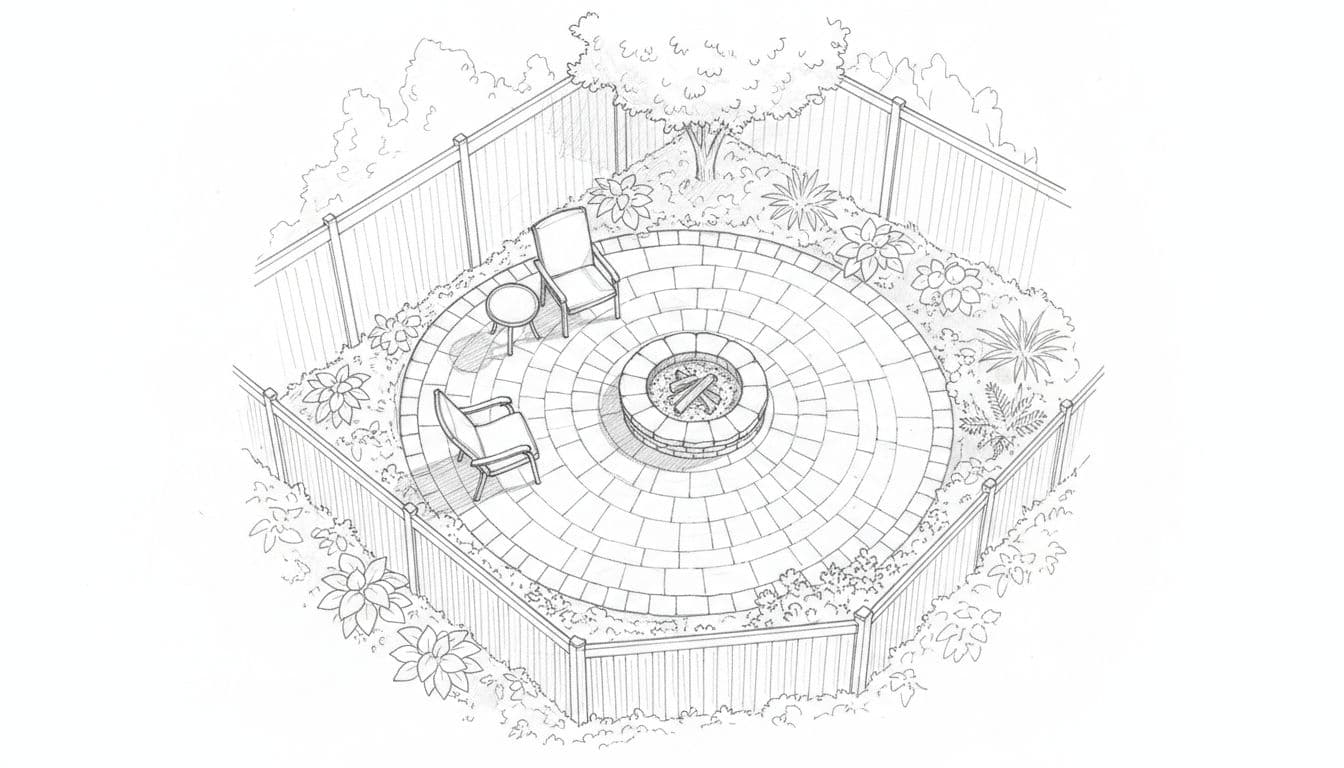
Pavers are often the better fit for patios, higher-end curb appeal, and homes with wet or sloped yards. They also work well for outdoor spaces built for dining, fire pits, and regular entertaining because they feel more custom and are easier to repair later.
That extra flexibility matters in Oregon weather. If part of the surface settles, a crew can reset it without tearing out everything around it.
If you're not sure which way to go, Chozen Gardens can walk the site, look at drainage, and give you a clear recommendation based on your property, not a one-size-fits-all pitch.
Concrete usually wins on upfront cost. Pavers often win on durability , drainage, and long-term value, especially in rainy Oregon conditions.
The right answer depends on your home's layout, how water moves across the yard, and the look you want to live with for years. If you're in Washington County or nearby Portland-area communities, contact Chozen Gardens for a quote or site review. A smart surface choice starts with seeing the whole property, not only the price tag.