
What Is a French Drain and Do You Need One?
After a long Oregon rain, a yard can turn into a sponge. You might see puddles near the house, a muddy walkway, or water creeping toward a crawl space.
That is often more than a nuisance. In Hillsboro, Beaverton, Aloha, and across Washington County, heavy rain and clay soil can hold water in place for days. A French drain is one of the most common fixes because it moves water away before it can damage soil, plants, patios, or the foundation.
If water keeps showing up where it should not, this is the place to start.
What a French drain is and how it works
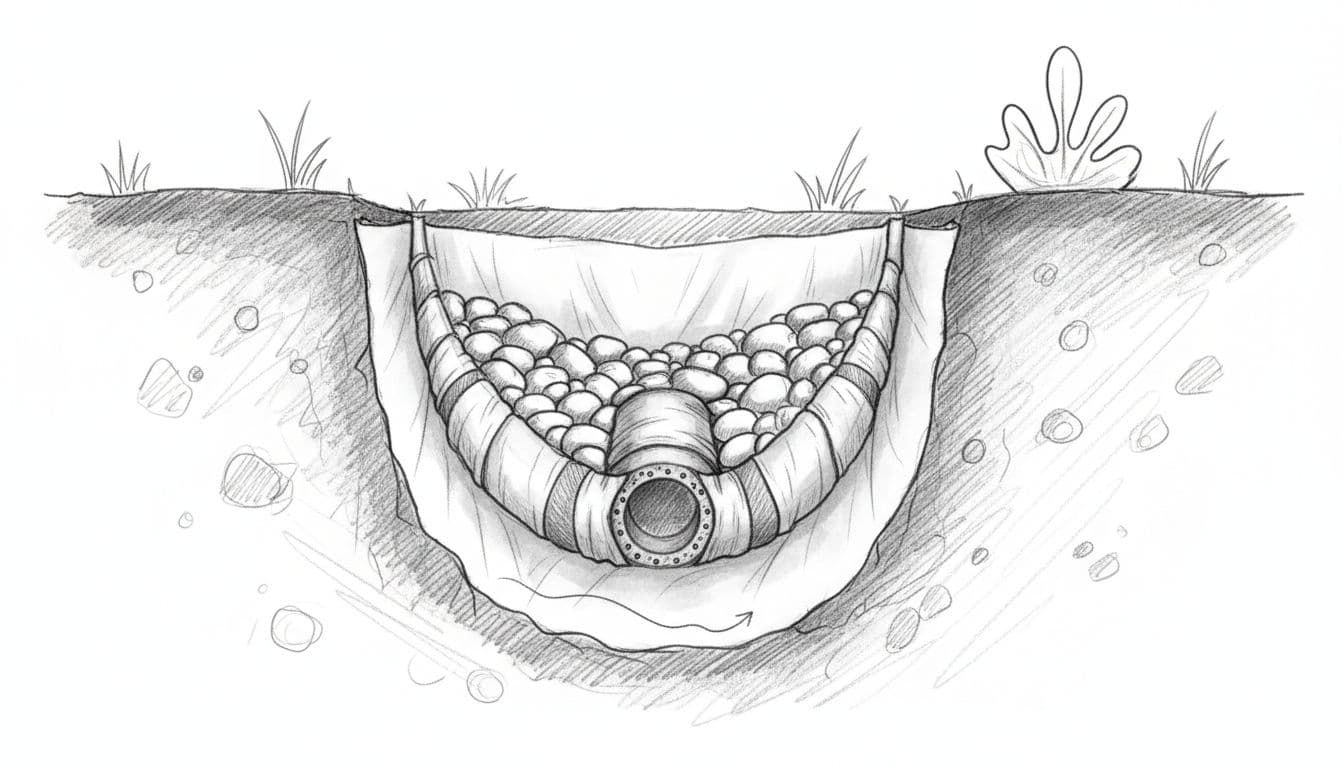
A French drain is a gravel-filled trench that collects water and carries it to a safer place. Most systems also include a perforated pipe, which helps move water faster and more predictably.
The basic parts that make a French drain work
The trench is usually about 9 to 12 inches wide and around 18 inches deep, although the final size depends on the site. Installers line that trench with filter fabric, add gravel, place a perforated pipe, and then cover it with more gravel. The pipe sits on a slight slope, often about 1 percent, so water keeps moving downhill instead of stalling.
Without that slope, the system can fail even if the pipe is new. Without fabric, soil can wash into the gravel and clog the drain over time.
Where the water goes after it enters the drain
Water seeps through the gravel first. Then it enters the pipe through small holes and flows to an outlet. That outlet might be a pop-up emitter, a dry well, or another approved drainage area on the property.
The outlet matters as much as the trench. If water has nowhere safe to go, the drain only shifts the problem. In Oregon, site layout and local code also matter, so water should not discharge onto a neighbor's property or create erosion.
How to tell if you need a French drain on your property
Some drainage problems are easy to spot. Others hide until damage starts to show.
Common signs your yard or foundation has a drainage problem
If your yard stays wet long after the rain stops, pay attention. Clay-heavy soil in the Pacific Northwest drains slowly, so water often lingers where the ground is low or compacted.
Common warning signs include:
- Puddles that sit near the foundation
- Soggy lawn areas that never seem to dry out
- Muddy paths or mulch that keeps washing away
- Damp crawl spaces or basement walls
- Musty or moldy smells indoors
- Erosion, settled pavers, or cracks linked to water pressure
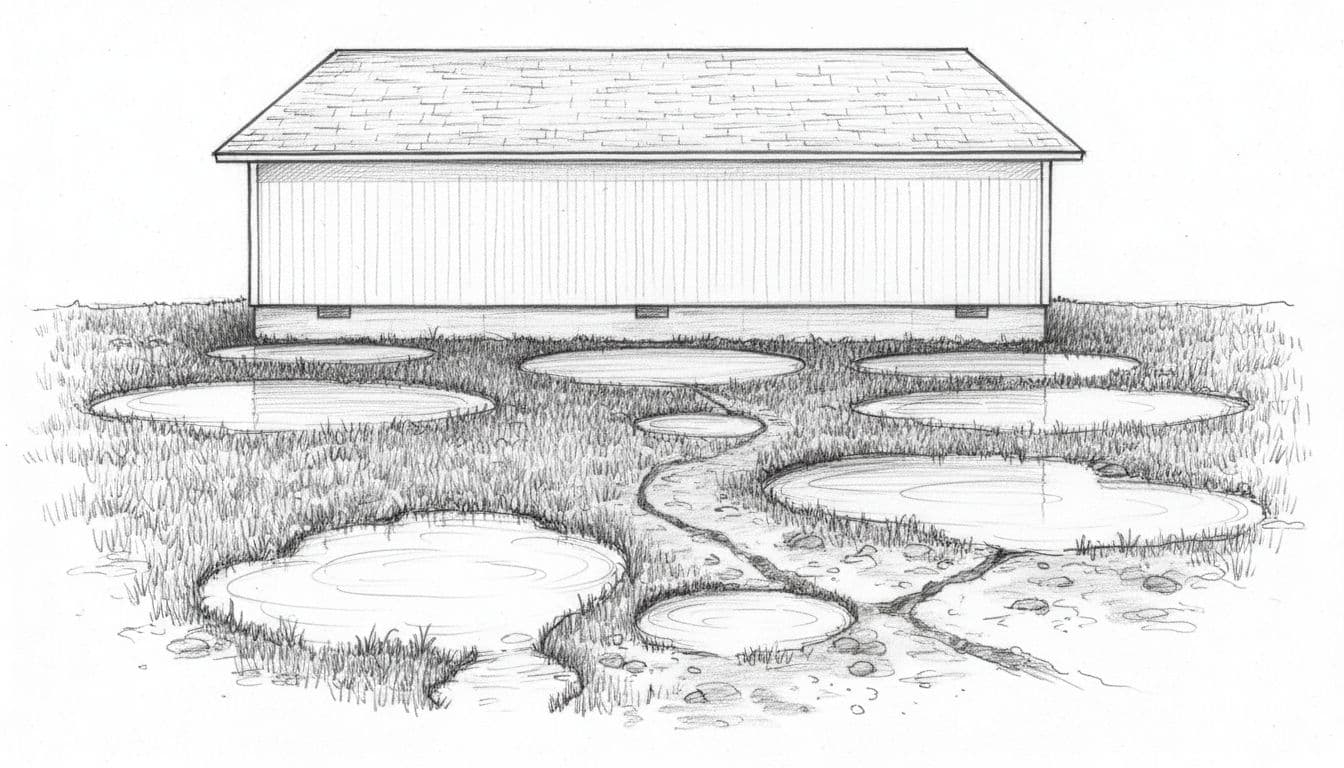
One wet patch after a storm is not always a crisis. Still, repeated pooling near your home deserves a closer look, especially if water collects in the same spot every season.
When a French drain is the right fix, and when it is not enough
A French drain works well when water moves across or under the soil and needs direction. That includes low spots in the yard, runoff near the home, and wet zones around planting beds, patios, or fences.
It is often a good fit when the grade is close to correct but water still hangs around. It can also help reduce hydrostatic pressure near a foundation when paired with the right outlet.
If water is reaching the foundation, guessing is risky. The source matters more than the symptom.
Some yards need more than one fix. A property may also need grading changes, downspout extensions, catch basins, a sump pump, or a full drainage plan. If roof water dumps next to the house, a French drain alone will not solve the root problem.
What homeowners should know before installing a French drain
A good drain is part design, part trench work. The details decide whether it lasts.
Typical installation, cost, and maintenance basics
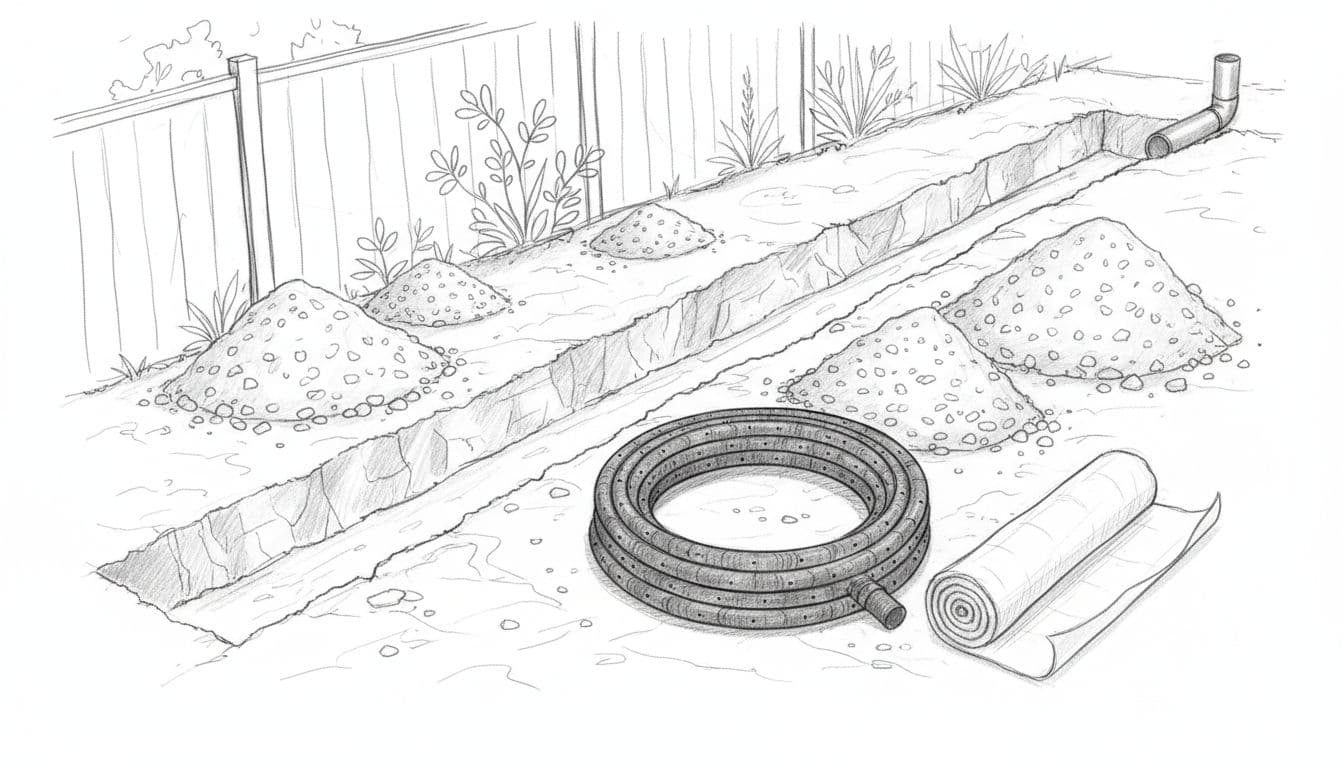
Most projects start with planning the route and marking utilities. After that, the crew digs the trench, lines it with fabric, adds gravel, lays the perforated pipe, and builds a safe outlet point.
Price changes with soil, depth, access, trench length, and outlet work. After installation, maintenance is simple but important. Check the outlet, keep debris away, and flush the line if flow slows down.
Why professional drainage design matters in rainy Oregon yards
DIY French drains often fail for one reason: the water path was wrong from the start. Poor slope, missing fabric, or a bad outlet can leave the yard wetter than before. In some cases, the drain sends water toward a fence, hardscape, tree roots, or the house itself.
That is why local site knowledge helps. Chozen Gardens works with the wet soils and rain patterns common in Washington County and nearby Portland-area neighborhoods. If you are seeing pooling water, foundation dampness, or landscape washout, their team can inspect the problem, protect the property, and recommend the fix that fits your yard.
A French drain can be a smart answer when water keeps pooling or moving toward your home. The best result comes from solving the source, not hiding the symptom.
If your yard in Hillsboro, Beaverton, Aloha, or nearby areas keeps staying wet, Chozen Gardens can help you figure out what is happening and what it will take to fix it. A drainage assessment or quote is a simple next step before water causes more damage.