Signs Your Trees May Be Suffering From Root Damage or Compaction
A tree can look stressed up top long before you spot the real trouble below. Root damage and soil compaction often build slowly, then show up as canopy decline, weak growth, or sudden stability problems.
That delay is why homeowners miss it. If you catch the warning signs early, you may save the tree and avoid a bigger pruning, hazard, or removal bill. If anything below sounds familiar, it's smart to call Chozen Gardens for a closer look.
The first signs of root damage or compaction usually show up in the canopy
Roots move water, oxygen, and nutrients. When they get cut, crushed, buried, or packed into hard soil, the canopy often shows the first changes.
 ### Leaves that yellow, wilt, or drop too early
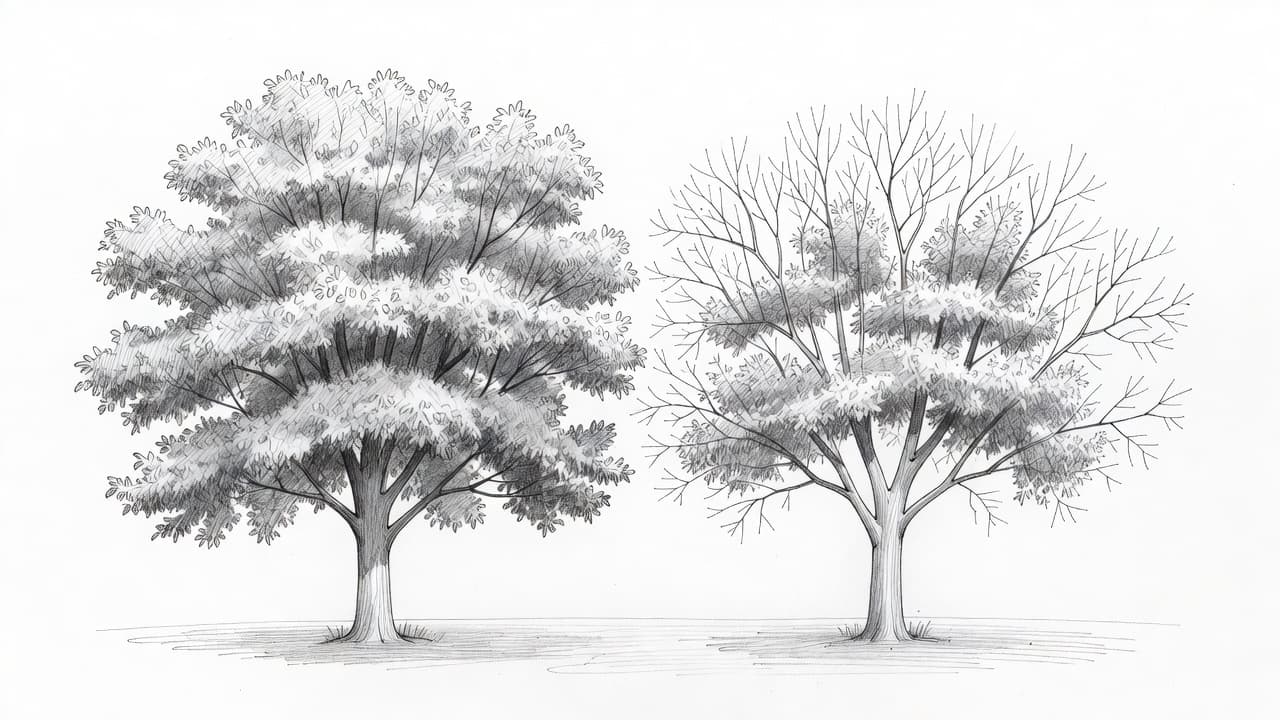
Leaves are usually the first clue. A tree with root trouble may yellow, droop, curl, or shed leaves weeks before normal fall color.
Sometimes that looks like drought or a minor disease issue. Still, repeated early leaf drop, especially after watering, points to trouble in the root zone. If one side of the canopy looks worse than the other, a damaged root on that side may be part of the problem.
Slow growth, smaller leaves, and a thinning canopy
A stressed tree often stops putting on normal growth. New twigs stay short, leaves come in smaller than usual, and the crown starts to look thin or patchy.
This change is easy to miss because it happens over time. However, if a tree used to fill out well every spring and now looks stalled, compacted soil may be choking root growth. Oklahoma State University notes that site disturbance and poor soil aeration often show up as sparse foliage and twig dieback before homeowners notice anything at ground level.
Dead branches, dieback, and new shoots on the trunk
A few yellow leaves don't always mean trouble. Dead branch tips, upper limb dieback, and small shoots popping from the trunk or base are stronger warning signs.
Those shoots, often called epicormic sprouts or suckers, are stress growth. The tree is trying to survive after losing normal support from its roots. If you see branch dieback plus thinning leaves, don't wait for the next windstorm to find out how weak the tree has become.
What root damage and soil compaction look like at ground level
Once the canopy starts to change, check the base of the tree and the soil around it. You don't need to dig to spot several common clues.
 ### A leaning tree, cracked soil, or roots pushing out of the ground
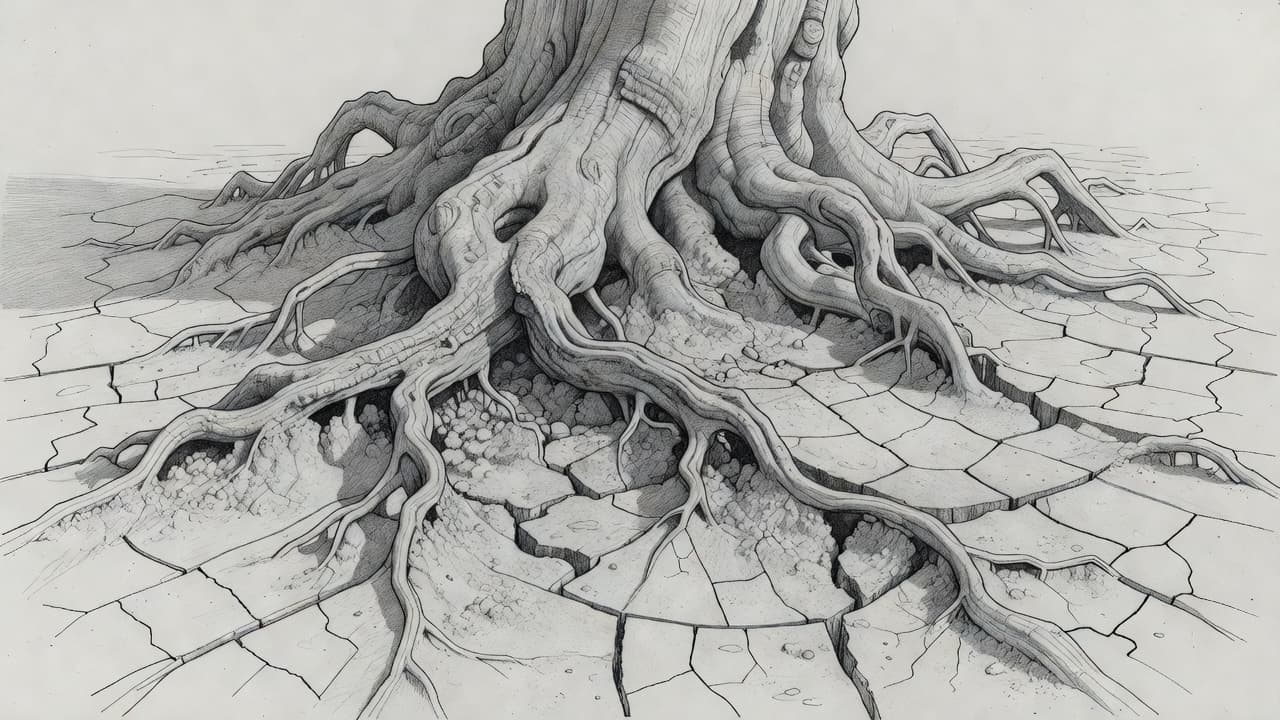
A tree that suddenly leans deserves attention right away. Healthy roots anchor the trunk, so a new lean, lifted soil, or cracks near the base can mean the root system has weakened.
Surface roots aren't always a problem by themselves. Yet sudden root exposure, heaving soil, or cracks after storms, trenching, grading, or construction work can point to damage. If the tree is near a house, fence, driveway, or play area, call Chozen Gardens quickly to assess the risk.
Mushrooms, soft bark, and a bad smell near the trunk base
Mushrooms near the trunk base often grow where wood is decaying. Shelf fungi, also called conks, are even more serious because they often mean internal rot has been there for a while.
Soft bark, dark wet patches, cankers, or a sour, swampy, or egg-like smell in the soil are also bad signs. Wet soil plus decay is a rough combination for roots.
Mushrooms at the base, soft bark, and a foul smell usually mean more than a watering issue.
When those symptoms show up together, get professional help fast. Root rot can weaken the tree from below while the canopy still looks only mildly stressed.
Soil that feels hard, dry, or waterlogged around the root zone
Compacted soil often looks dull, tight, and lifeless. Water may sit on the surface for hours after rain because it can't move through the soil pores.
Roots need air as much as water. So when the ground stays hard in dry weather, muddy when wet, and dusty when dry, the tree may be struggling to breathe underground. Repeated foot traffic, parked vehicles, and heavy equipment often create this problem, especially in busy yards across Hillsboro, Beaverton, and nearby neighborhoods.
How to tell whether the problem is root rot, compaction, or something else
Drought, pests, and leaf diseases can look similar at first. Still, a few simple checks can help you tell when the problem points more strongly to the roots.
A simple screwdriver or shovel test can reveal compacted soil
Try a light test near the drip line, not against the trunk. Push a screwdriver or narrow shovel into moist soil with gentle pressure.
If it stops within a few inches, the soil may be too compacted for healthy root growth. Rutgers and other tree care sources describe probe testing as a practical way to flag hard ground before formal testing. Arborists use penetrometers for exact readings, but this quick check can tell you when the soil is unusually tight.
When to suspect root rot instead of just dry weather
Dry weather stress often improves after slow, deep watering. Root rot usually doesn't.
If the tree keeps wilting after watering, drops leaves out of season, smells bad at the base, or has mushrooms near the trunk, suspect rot. Also watch for decline after long wet periods or drainage problems. In other words, extra water won't fix roots that are already decaying.
Why a professional tree inspection is the safest next step
Large trees can hide serious root failure until a branch breaks or the trunk shifts. That's why a certified arborist should inspect any tree with more than one warning sign, especially if it's leaning or close to your home.
Chozen Gardens can check the canopy, trunk base, root flare, and soil conditions without risky digging. For homeowners in Hillsboro, Beaverton, Aloha, Washington County, and nearby Portland-area communities, that means clear answers on pruning, soil decompaction, drainage work, cabling, or removal when needed. A licensed, bonded, and insured crew can also spot whether recent grading, irrigation issues, or construction traffic started the problem.
When it's time to call Chozen Gardens
Trees rarely decline for no reason. When you see canopy thinning, early leaf drop, dieback, mushrooms at the base, or hard waterlogged soil, the roots may already be under stress.
Early action protects the tree and lowers the risk around your home. If you notice multiple warning signs , contact Chozen Gardens for a tree evaluation and get a clear plan before the damage gets worse.