Tree Risk Assessment: When Should You Have a Tree Inspected by an Arborist?
A tree can look healthy from the street while weak roots, internal decay, or a dangerous limb develop out of sight. Waiting until it falls can turn a manageable concern into an emergency.
A professional tree risk assessment gives you a clear view of what is happening before a branch damages a roof, blocks a driveway, or threatens someone below. Knowing the warning signs, timing an inspection well, and calling Chozen Gardens early can protect your Washington County or Portland-area property.
Tree Risk Assessment: When to Call an Arborist
A tree risk assessment is a professional evaluation of a tree's condition, structural defects, and the harm that could occur if part of it fails. The arborist considers both the chance of failure and what the tree could strike.
An inspection deserves priority when a tree is close to a house, garage, driveway, sidewalk, play area, fence, or utility line. A healthy-looking canopy does not cancel out a weak trunk, compromised roots, or a poorly attached limb.
Chozen Gardens can inspect trees across Washington County and greater Portland. An ISA Certified Arborist with Tree Risk Assessment Qualification (TRAQ) training can provide reliable findings and clear written recommendations.
Warning Signs That Need Prompt Attention
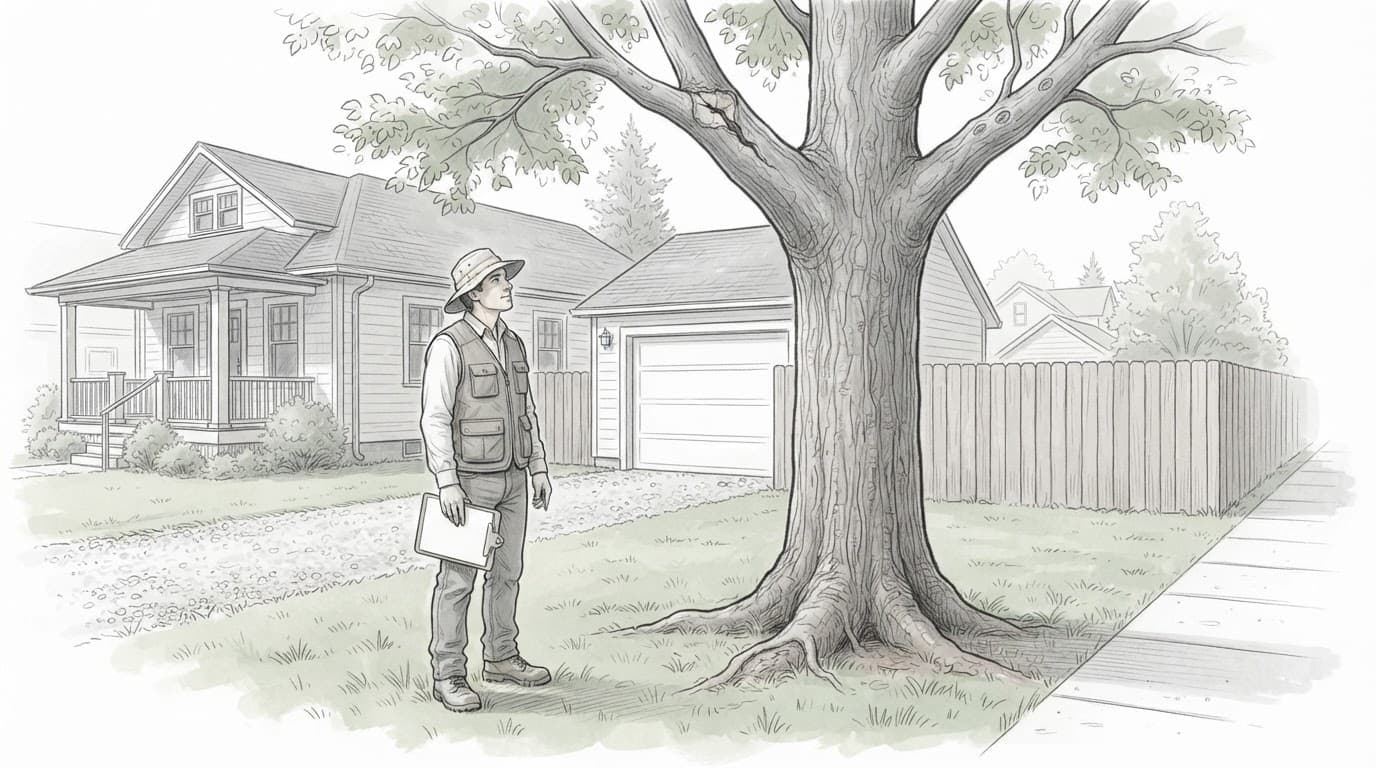
Stay on the ground and look for obvious changes. A sudden lean, lifted soil near the base, exposed roots, trunk cracks, or a split trunk all call for prompt attention.
Other red flags include cavities, soft or rotten wood, mushrooms near the trunk base, large dead branches, hanging limbs, and recent branch drop. Weak branch unions can split under wind or snow, especially when two stems grow tightly together.
Heavy topping or severe pruning can also leave large wounds and poorly attached new growth. Meanwhile, sparse leaves, unusual color, or dieback may point to stress, disease, or root trouble. Call Chozen Gardens when any of these signs appear rather than trying to cut or climb around the problem yourself.
When Property Changes Affect Root Stability
Construction often changes tree risk long before damage shows in the crown. Trenching, grading, paving, sidewalk work, and soil compaction can cut roots or reduce the oxygen available in the soil.
Removing a nearby tree can expose a formerly sheltered tree to stronger wind. Because root damage may take months to show, schedule a tree risk assessment after major site work, especially if workers cut roots near the trunk.
After a Storm, Inspect Trees Before the Next Wind Event
Storms can reveal defects that were already present. High winds and saturated soil may leave branches partially broken, split a trunk, or loosen the root plate.
Keep people and pets away from hanging limbs, root upheaval, and cracked trunks. Never approach branches touching power lines. Take photos from a safe distance and note where debris landed, then call Chozen Gardens for private-property hazards.
OSU Extension advises property owners to put personal safety ahead of storm cleanup, particularly when chain saws are involved. An arborist can determine whether careful pruning, temporary support, restricted access, or removal makes sense.
For a street or park tree emergency in Portland, call the city's 24/7 Urban Forestry emergency line at 503-823-TREE (8733) and press 1. Private-property hazards need evaluation by a qualified arborist, followed by permit steps when required.
What an Arborist Checks During an Inspection
A careful inspection starts with the tree's species, size, age range, and location. The arborist then examines the crown, branch attachments, trunk, root flare, visible roots, soil conditions, and any recent changes to the site.
Nearby targets matter as much as visible defects. A dead branch over an unused corner of a yard poses a different concern than the same branch above a child's play space or a busy sidewalk.
After a tree risk assessment, recommendations may include monitoring, selective pruning, cabling or bracing, limiting access beneath the tree, or removal. The right option depends on the tree and its setting, not a one-size-fits-all answer.
What a Useful Report Should Include
A written report should identify the tree and describe defects, site conditions, and nearby targets. Photos help document concerns, while priority levels and recommended timing help you plan next steps.
Clear findings can also help property managers, insurers, and homeowners making future improvement decisions. Ask Chozen Gardens whether permit considerations may apply before scheduling major pruning or removal.
In Portland, private tree removal generally requires a permit for trees 12 inches DBH or larger. Street trees and heritage trees have separate permit requirements.
How to Choose a Qualified Arborist in the Portland Area
Start with credentials and safe work practices. Look for ISA certification, TRAQ experience when you need a formal risk evaluation, proper licensing, bonding, insurance, and local knowledge.
A trustworthy arborist explains what they observed and gives written recommendations. Removal may be necessary, but it should not be the automatic answer to every concern.
Chozen Gardens is a licensed, bonded, and insured Oregon property-services company. Its team provides professional tree risk assessments, pruning, removal, stump grinding, pest and disease management, and related yard services throughout Washington County and greater Portland.
Questions to Ask Before Scheduling
Share useful details when you call, including storm history, construction work, photos, and concerns about a particular target. Then ask:
- Who will perform the assessment, and what arborist credentials do they hold?
- Is a ground-based inspection enough, or does the tree need additional testing?
- Will the recommendations explain urgency, next steps, and possible permit needs?
- Could utility coordination or restricted access affect the work?
The Cost of Waiting Is Often Higher Than an Inspection
Tree inspection fees vary with tree size, the number of trees, access, urgency, and whether you need a written report. Ask for a clear quote and confirm whether the assessment fee is separate from pruning or removal.
Planned care is usually easier to schedule than emergency cleanup after a failure. Property damage, blocked access, and injury can cost far more than getting a professional opinion early.
If you see a warning sign, have storm damage, or want guidance before making a tree care decision, contact Chozen Gardens for a practical tree risk assessment .
Protect Your Property Before a Small Defect Grows
Cracks, decay, deadwood, fungal growth, leaning, root damage, storm injury, and nearby construction all justify an arborist inspection. Early assessment gives you time to understand your options before a defect becomes a serious hazard.
Call Chozen Gardens for a professional tree risk assessment and dependable follow-up care for your Portland-area property.