
What are the Best Plants for Pacific Northwest Landscaping?
Portland-area yards can swing from saturated winter soil to dry, exposed beds by August. The best plants for Pacific Northwest landscaping match the conditions already present on your property, rather than fighting them.
Light, drainage, moisture, soil compaction, and available space all shape what will thrive. Chozen Gardens helps homeowners across Washington County and greater Portland choose, install, and care for plants as part of a practical yard plan.
Best plants for Pacific Northwest landscaping in Oregon yards
Oregon State University Extension recommends choosing native plants by their natural habitat, such as woodland, hedgerow, or wet-site conditions. Once established in the right spot, many natives need less summer irrigation and provide food or cover for local birds and pollinators.
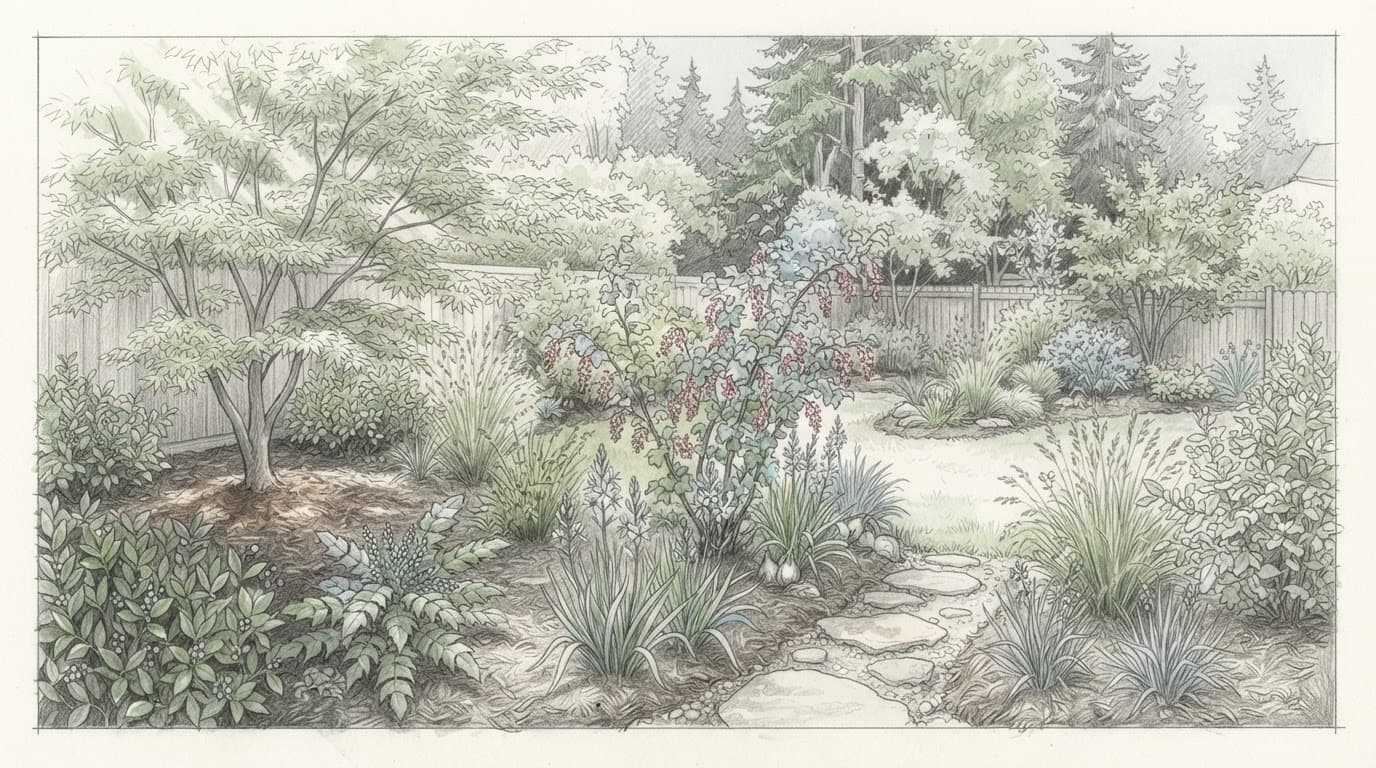
Native trees for shade, structure, and seasonal interest
Vine maple works well beneath taller trees or in part-shade woodland beds. Oregon white oak needs full sun and well-drained soil, while western red cedar creates dense year-round screening where it has room to grow.
Cascara supports wildlife with flowers and fruit, and western serviceberry offers spring blooms, fall color, and berries. These trees can outgrow a casual planting spot, so keep mature height and spread clear of roofs, utility lines, septic systems, and foundations. Early tree planning avoids aggressive pruning and future safety problems.
Shrubs for color, privacy, and wildlife
Red flowering currant brings early spring color to sunny or partly shaded beds. Oregon grape adds evergreen structure, while salal and evergreen huckleberry are better choices for protected shade.
Oceanspray handles sun or partial shade, red osier dogwood prefers consistently moist ground, and western mock orange adds fragrance in late spring. A mix of evergreen and deciduous shrubs keeps the yard interesting through winter without depending on one species.
Groundcovers, grasses, and perennials for finished beds
Kinnikinnick suits sunny, well-drained slopes. Coastal strawberry fits brighter garden spaces with moderate moisture, while Oregon wood-sorrel spreads naturally in cool shade.
For flowers and texture, consider camas in moist spring soils, western red columbine, Douglas iris, yarrow, Oregon sunshine, blue wildrye, or pine bluegrass. Native beds can look formal along a walkway, loose and meadow-like, or simple enough for a low-maintenance side yard.
Match plants to sun, soil, and water
A popular plant can still fail in the wrong location. Portland properties often include damp west-side shade, compacted urban soil, open sunny areas, and summer-dry slopes within the same yard.
Best choices for full sun and dry summer conditions
Oregon white oak, red flowering currant, blueblossom, Oregon sunshine, yarrow, kinnikinnick, Idaho fescue, and bluebunch wheatgrass suit sunny locations with drier or well-drained soil.
Drought-tolerant does not mean water-free. New shrubs, trees, and perennials need deep, regular watering until roots establish. Keep shade plants out of hot, reflective beds near concrete or south-facing walls, where stress builds quickly in summer.
Plants for shade and moist woodland conditions
Vine maple, salal, evergreen huckleberry, red huckleberry, inside-out flower, Oregon wood-sorrel, and Pacific bleeding heart fit shaded or partly shaded spaces. OSU Extension also lists cascara, mock orange, and native woodland groundcovers for layered garden plantings.
These plants prefer moisture-retentive soil, organic mulch, and protection from harsh afternoon sun. For areas that stay reliably moist, red osier dogwood and tufted hair grass offer stronger options than dry-site natives.
Check drainage, mature size, and Portland plant rules
Before planting, test drainage by watching how long water remains after a heavy rain. Compacted soil, standing water, or runoff near the house may call for grading or drainage improvements before plants go in.
Measure future space, not just the nursery pot. Check mature height and width near fences, walkways, foundations, and overhead wires.
Portland's official Plant List includes Native Plants and Nuisance Plants lists. Native plants may be required in Environmental Overlay Zones and some Greenway Overlay Zones, while nuisance plants are prohibited in city-required landscaping and several protected areas. Call Chozen Gardens when plant rules or difficult site conditions affect your project.
Build a healthier yard with a complete planting plan
Plants perform better when the whole property supports them. Drainage, tree canopy, irrigation, paths, fencing, and soil preparation all affect the finished result.
Use layers instead of one plant everywhere
A balanced yard usually combines taller trees, medium shrubs, flowering perennials, grasses, and low groundcovers. Layers reduce bare soil, improve privacy, and offer seasonal variety without creating a crowded bed.
Group plants with similar light and water needs. That approach makes irrigation easier and prevents thirsty woodland plants from sharing a dry border with sun-loving grasses.
Give new plants time to establish
Set plants at the correct depth, improve poor soil where needed, and apply mulch without touching trunks or crowns. Then water deeply during dry periods and remove weeds before they compete with young roots.
Native plants still need attention during their first one or two growing seasons. Pruning, pest checks, and irrigation adjustments help trees and shrubs develop strong structure.
Get local help from Chozen Gardens
Chozen Gardens is licensed, bonded, and insured for work throughout Washington County and the greater Portland area. The team can help with plant selection, drainage solutions, tree pruning, risk assessments, wood fencing, concrete patios, and cedar raised garden beds with drip irrigation.
A site-specific plan gives your yard a better start and prevents costly corrections later. Contact Chozen Gardens to discuss the plants, improvements, and maintenance your property needs.
A yard that fits Oregon's growing conditions
The best plants for Pacific Northwest landscaping fit your yard's sun, soil, drainage, moisture, and mature space. Vine maple, Oregon grape, salal, red flowering currant, kinnikinnick, camas, and native grasses offer dependable starting points when each plant has the right conditions.
For practical local advice and professional outdoor work in the Portland area, contact Chozen Gardens and build a yard that grows better year after year.