What Happens During a Professional Tree Removal Service? Step-by-Step Breakdown
When a tree has to come down, most homeowners picture the saw. The real job starts earlier, with inspection, planning, and safety steps that protect your home and yard.
You might need tree removal after storm damage, because of disease, or when a tree grows too close to the roof, fence, or foundation. If you're in the Portland metro area, Chozen Gardens is a local team to call for licensed, bonded, insured service and a quote from a certified arborist.
The first visit starts with a close tree and site inspection
A real removal begins with a careful look at the tree and everything around it. That first visit tells the crew what can go wrong, and how to avoid it.
Why arborists look at tree health, size, and lean
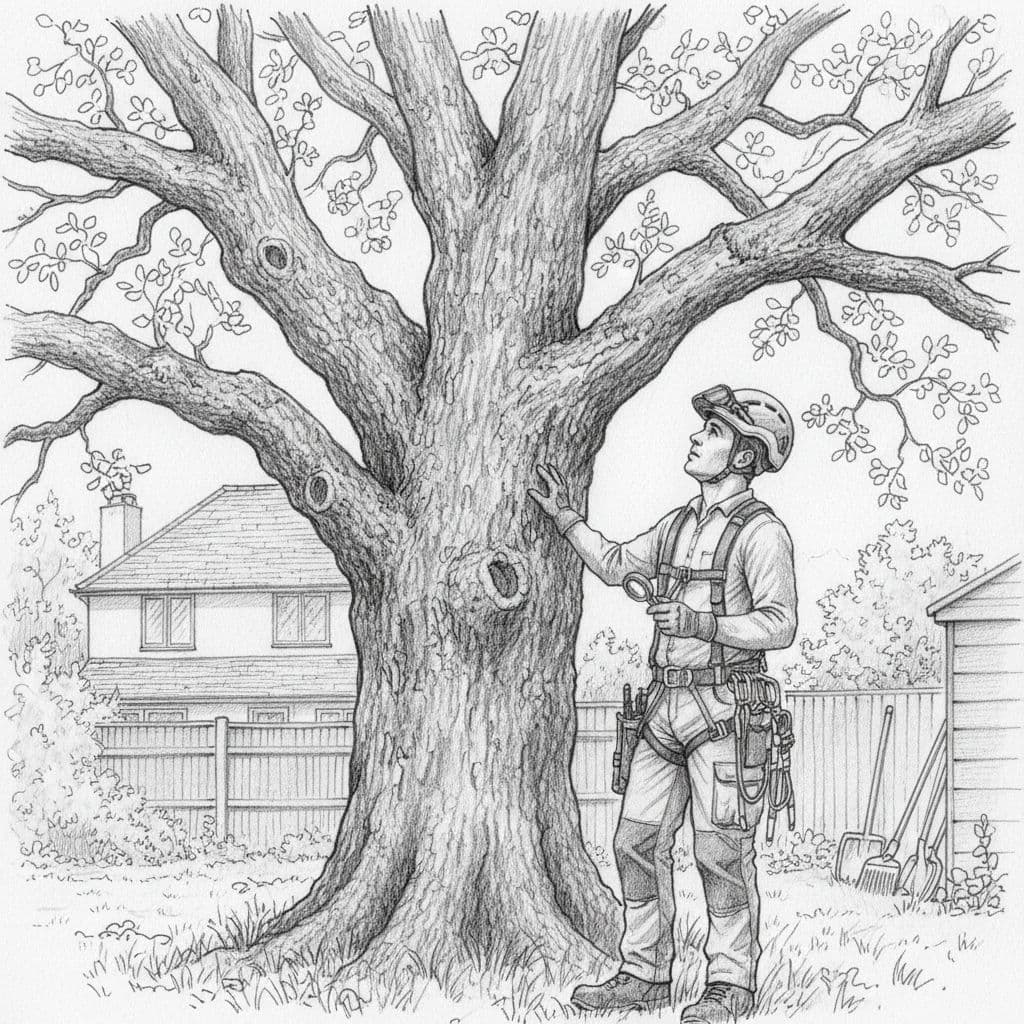
The arborist checks the trunk, limbs, root flare, and canopy. They're looking for decay, cracks, dead wood, hollow spots, root problems, and signs the tree is already unstable.
Size matters too. A small tree in an open yard may come down more simply, while a tall maple over a house needs a slower plan. The tree's lean also matters because it affects balance, cutting angles, and where weight shifts during removal.
How the crew spots hazards before work begins
The yard gets the same attention as the tree. Crews look for power lines, fences, roofs, sheds, driveways, garden beds, and narrow access points for trucks or equipment.
This is where experience pays off. A certified arborist can spot weak points and site risks before work day, which lowers the chance of damage. Chozen Gardens starts here, so the removal plan fits your property instead of forcing a one-size-fits-all approach.
Planning the removal keeps the job safe and efficient
After the inspection, the crew builds the plan. Homeowners often don't see this part, but it's one of the biggest reasons to hire a pro.
Choosing the safest method for the tree and property
Some trees can be felled in one piece, but that usually happens only where there's plenty of open space. In neighborhoods, crews often remove trees from the top down.
Depending on the site, they may use climbing gear, ropes, a bucket truck, or a crane. Tight backyards, large trunks, and trees hanging over roofs often call for section-by-section removal, because control matters more than speed.
What gets cleared from the work zone before cutting starts
Before any cutting begins, the crew clears the area. Cars move out of the driveway, patio furniture gets shifted, and pets and people stay well away from the drop zone.
Crews also mark the work area with cones, tape, or trucks placed for safety. That controlled setup keeps bystanders out and gives the ground crew room to work without surprises.
When a permit or utility check may be needed
Some removals need extra steps before the crew arrives. A permit may be required if the tree is protected, and utility coordination may be needed if lines are close.
A good tree company handles those checks early. That saves time, avoids confusion, and keeps the job from stopping halfway through. If you're calling Chozen Gardens, ask about permits and utility clearance during the estimate so everything is clear from day one.
The tree is removed in sections, not all at once
This is the part most people want to understand. In most residential jobs, the tree comes down in controlled pieces, not in one dramatic fall.
Branches come off first to reduce weight and improve control
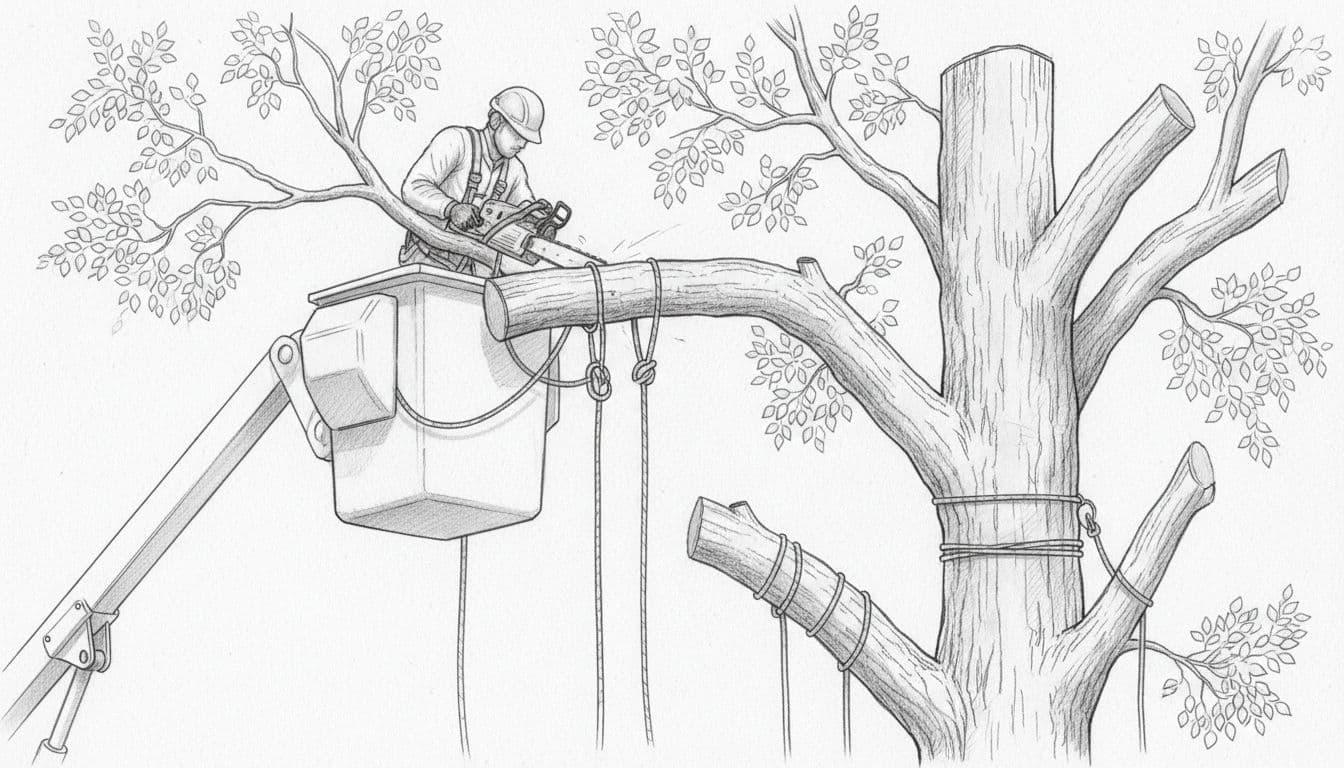
Crews usually start high and work downward. They remove outer limbs and upper branches first, because that reduces weight and makes the rest of the tree easier to handle.
If the space is tight, branches don't get dropped freely. The crew uses rope rigging to lower each piece in a controlled way. One worker cuts aloft while the ground crew guides the branch down, which helps protect fences, roofs, and nearby plants.
Good tree removal looks calm because the hard work happened in the planning.
The trunk is cut into manageable sections
Once the canopy is gone, the trunk stays standing as a bare spar. Then the crew cuts it into shorter sections based on weight, height, and the room below.
Large trees rarely come down in one full drop near a house. Instead, each trunk section is lowered by rope or lifted away with equipment. In an open area, some lower pieces may be dropped into a clear landing zone, but only when the site allows it.
Special equipment may be used for large or risky removals
Some jobs need more than chainsaws and ropes. Bucket trucks help crews reach high limbs without climbing every section, and cranes help lift heavy wood over homes, garages, or fences.
Harnesses, rigging gear, ropes, helmets, and saws all work together for one goal: protect the crew, the house, and the landscape. If a tree is cracked, storm-damaged, or leaning over your home, this is not the time for guesswork. That's why many Portland-area homeowners call Chozen Gardens instead of risking a DIY cut.
Cleanup, stump work, and the final walkthrough finish the job
A professional service doesn't stop when the last section hits the ground. Cleanup is part of the job, and it's one reason homeowners hire a crew instead of renting tools for a weekend.
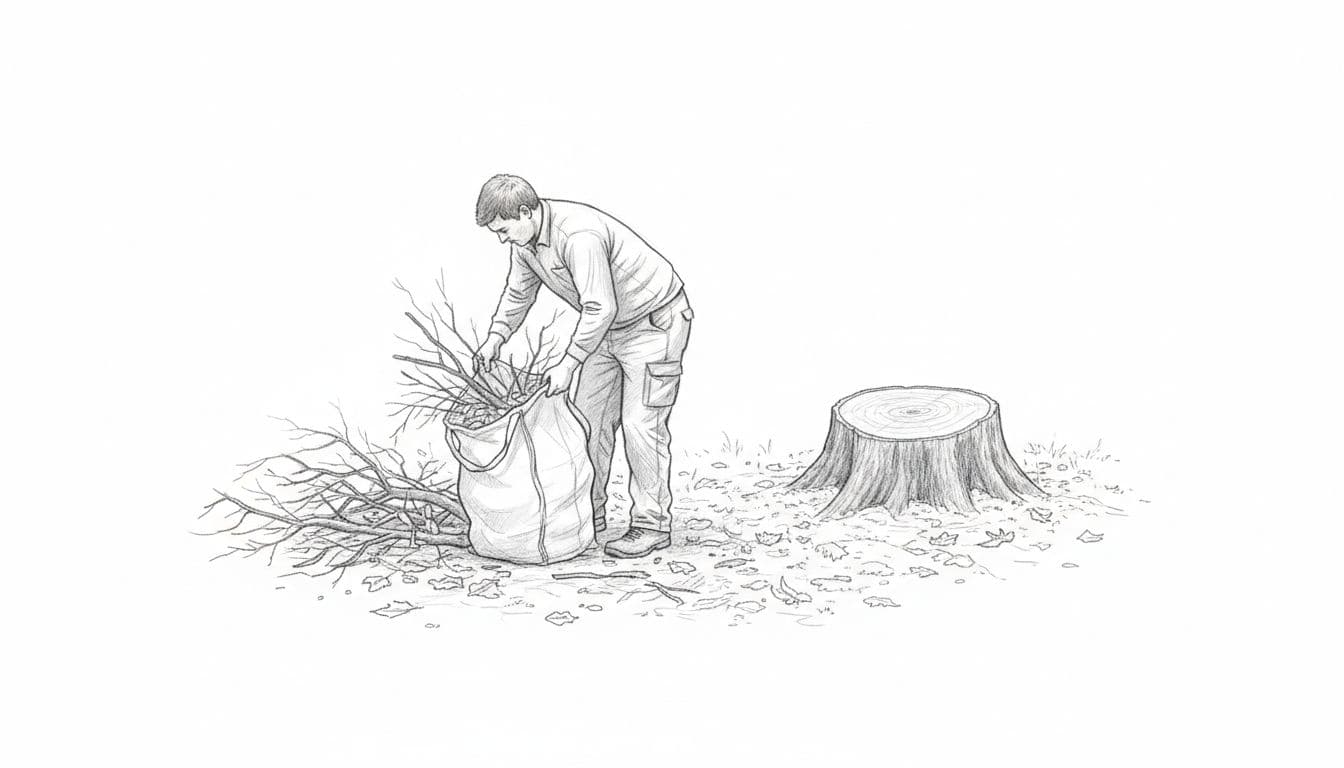
What happens to branches, logs, and wood chips
Branches are usually chipped, logs are cut into manageable pieces, and debris is loaded and hauled away. Some homeowners ask to keep firewood or wood chips, and many crews can leave those behind if requested.
That cleanup has real value. You don't have to drag brush, stack wood, or deal with a yard full of sawdust and broken limbs after the crew leaves.
Stump grinding and site repair can be added next
The stump often stays unless stump grinding is part of the quote. Grinding removes the stump below grade, then the remaining hole is usually filled with grindings or backfill so the area is safer and easier to use.
Before leaving, the crew should do a final walkthrough with you. That's the time to confirm debris is gone, gates are secure, and the site looks the way you expected. Chozen Gardens can explain what's included, what's optional, and what the yard will look like after the work is done.
Conclusion
A professional tree removal service follows a clear order: inspect the tree, plan the job, remove it in controlled sections, and clean the site when the work is done. That careful process is what keeps a risky tree from turning into property damage.
If you have a dead, damaged, or dangerous tree in the Portland metro area, Chozen Gardens is ready to help. Contact their licensed, bonded, insured team for a quote and a certified arborist's assessment, so you know the safest next step before the next storm does it for you.