
When Is Tree Removal Necessary? Warning Signs Homeowners Shouldn’t Ignore
A tree can look partly healthy and still be unsafe. Green leaves on one side don't cancel out decay, root failure, or storm damage.
Many warning signs start small. A slight lean, a few dead limbs, or mushrooms near the trunk might not seem urgent at first. Still, ignoring them can lead to property damage, injury, or a rushed removal after the next windstorm. That's often the difference between a planned job and a dangerous emergency.
If you own a home in Beaverton, Aloha, or the wider Portland metro area, Chozen Gardens can inspect a questionable tree before the problem grows. Knowing when tree removal makes sense starts with the signs below.
The clearest signs a tree is becoming unsafe
One problem doesn't always mean a tree has to come down. However, several warning signs at once usually point to serious risk, especially when the trunk, roots, and canopy all show stress.
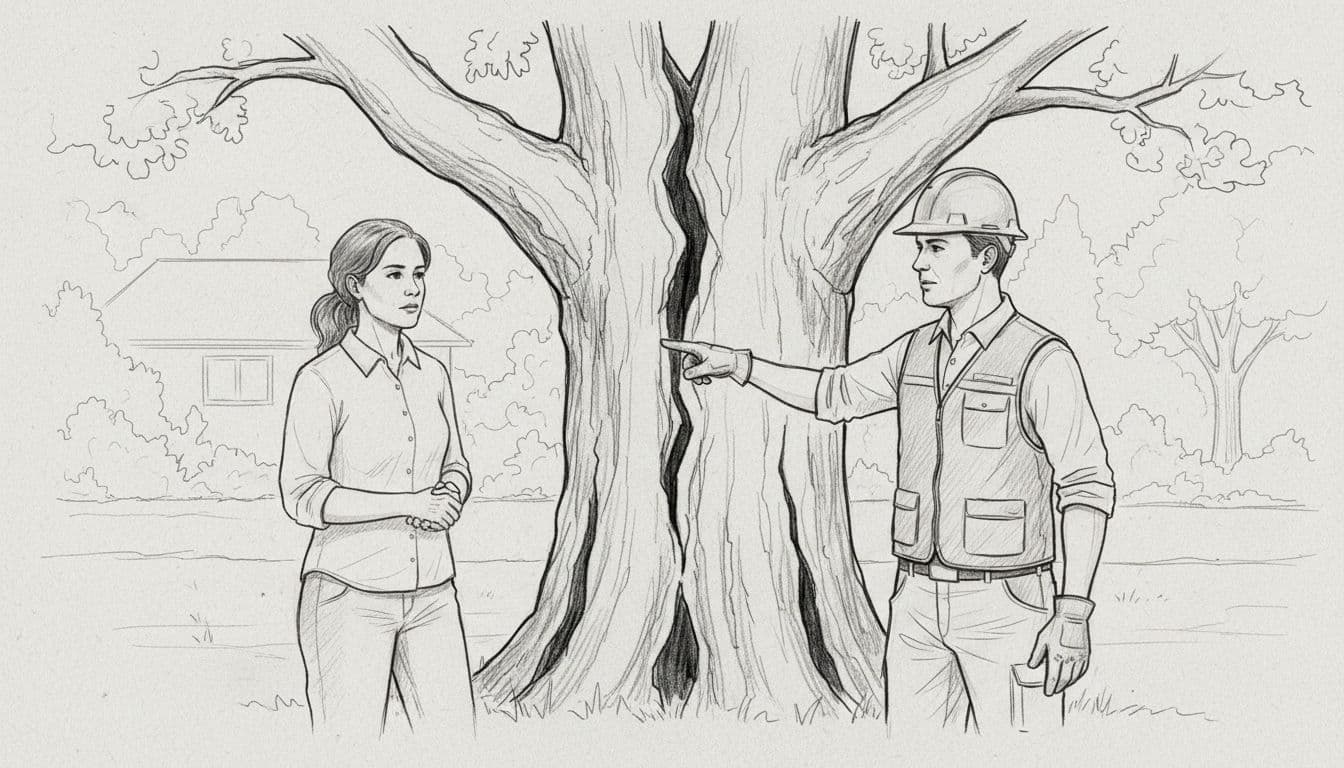
A new lean, cracking trunk, or visible hollow spots
A tree that has leaned the same way for years may be stable. A new lean is different, because it can mean root failure or fresh soil movement. If the ground rises on one side, call an arborist fast.
Deep trunk cracks, long vertical splits, and large wounds also matter. They weaken the wood that carries the tree's weight. Hollow spots and soft, crumbly wood are just as serious, even when bark still looks normal. These are structural red flags, not cosmetic flaws. A certified arborist should inspect them right away, because weak trunks can fail with little warning.
Dead branches, thinning leaves, and a canopy that keeps shrinking
One dead branch doesn't always mean removal. Pruning may solve a small problem caused by shade, storm breakage, or past stress.
Widespread dieback is different. If the canopy thins each season, bare patches keep spreading, or leaves look smaller than normal, the tree may be declining from the inside. Brown or off-color leaves during the growing season can point to disease, pests, or root trouble. When a large share of the crown is dead, the tree often can't recover well enough to stay safe near a house, fence, or driveway.
Fungus at the base, damaged roots, or soil lifting around the tree
Problems below ground are easy to miss, yet they're often the reason a tree falls. Mushrooms or shelf fungus at the base can mean decay in the roots or lower trunk. Exposed roots, roots cut during construction, or soil that lifts around the tree also matter.
If the root system is weak, the whole tree loses its anchor. You may not see the full damage until the trunk shifts or the canopy drops limbs. That's why hidden root issues deserve a prompt inspection, not a wait-and-see approach.
When storm damage or poor placement makes removal the safer choice
Sometimes the tree wasn't failing until weather, space, or nearby structures changed the equation. In those cases, removal may be the safer choice even if the tree still has live growth.
After a storm, look for split trunks, broken tops, and hanging limbs
After a storm, don't judge a tree by its leaves. A tree can stay green and still be unstable. Split trunks, broken tops, hanging limbs, and major limb loss all raise the chance of later failure.
A cracked leader, especially on a tall tree, can break weeks after the storm passes. Meanwhile, hanging branches can drop without warning. Stay clear of damaged trees, and keep kids and pets away from the area. If the tree could reach your home, driveway, or street, call for professional help quickly. Chozen Gardens can assess the damage and tell you if pruning will work or removal is the safer call.
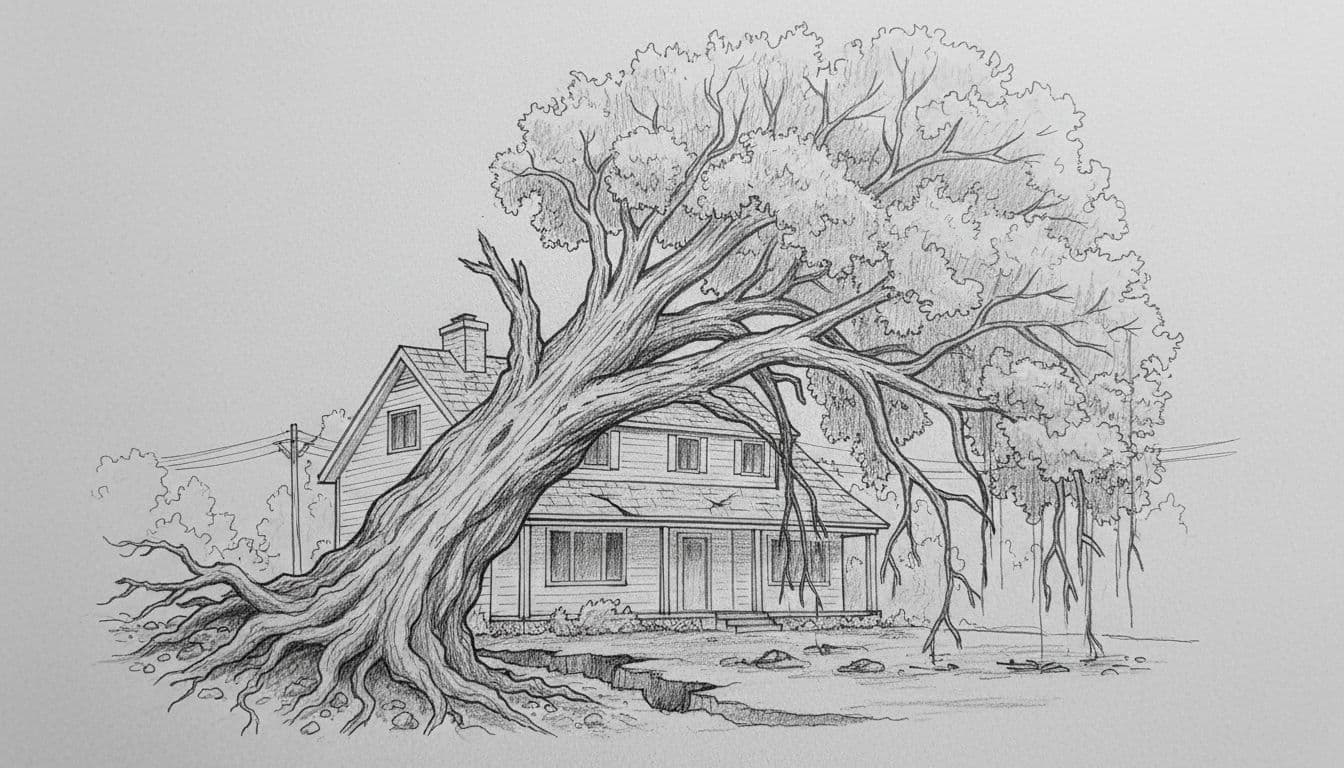
Trees too close to roofs, driveways, fences, or power lines
Location matters as much as condition. A borderline tree becomes a bigger problem when it leans over a roof, crowds a driveway, pushes on a fence, or grows into power lines. Even healthy-looking roots can crack hardscape or lift walkways as they expand.
Sometimes pruning creates enough clearance. However, that only works when the tree is sound and the space problem is manageable. If the tree is already unhealthy, or if there isn't enough room for safe growth, removal often prevents repeat trimming, storm damage, and future repair bills. That's especially true in tight Portland-area lots where trees and structures sit close together.
Why acting early protects your home, budget, and safety
Early action is usually cheaper, safer, and less stressful. It also gives you time to make the right choice instead of rushing after a failure.
How a certified arborist helps you choose between pruning and removal
A certified arborist looks at more than leaves. They check trunk strength, branch structure, root stability, pest or disease pressure, and the tree's distance from nearby property. That full picture matters, because some trees need pruning, cabling, or treatment, not removal.
On the other hand, some trees have crossed the line where repair no longer makes sense. An experienced arborist can explain the risk in plain language, so you know why removal is recommended and what comes next.
Why waiting can lead to bigger repairs and higher emergency costs
Waiting can turn a manageable job into an expensive emergency. A limb that could have been removed safely may end up through a roof. A tree that looked questionable in dry weather may fail once rain softens the soil or wind hits the canopy.
Early assessment protects your home and keeps access clear for cars, crews, and emergency vehicles. If you see warning signs on your property, Chozen Gardens can inspect the tree, give honest guidance, and provide a quote before small damage becomes a bigger repair.
Conclusion
Tree removal becomes necessary when a tree shows structural damage, root failure, storm injury, or serious decline. The safest next step is a close inspection by a certified arborist, especially when the tree sits near your home, driveway, or power lines.
If a tree on your property doesn't look right, don't wait for the next storm to make the decision for you. Chozen Gardens helps Portland metro homeowners with evaluations, removals, and clear quotes, so you can deal with the risk before it turns into a costly emergency.