
Yard Grading vs. Drainage Systems: Which Is Best for Standing Water?
A puddle that remains in your yard long after rain stops is more than a nuisance. It often points to a slope, soil, runoff, or underground water issue that needs attention.
Yard grading vs. drainage systems comes down to where the water starts and where it can safely go. Grading redirects water across the surface, while drainage systems collect, carry, or absorb water below ground. For Portland-area homeowners, Chozen Gardens can assess the source before a small wet spot turns into foundation moisture, muddy turf, or damaged landscaping.
Yard Grading vs. Drainage Systems: Which Fix Fits Your Yard?
Grading changes the shape of the ground so rainwater flows away from the house and out of shallow low areas. It is often the simplest fix when settled soil, compacted lawn, or uneven terrain creates a small puddle.
Drainage systems handle water that surface shaping cannot control. They collect roof runoff, seepage, or concentrated water from patios and driveways, then move it to an approved outlet or infiltration area.
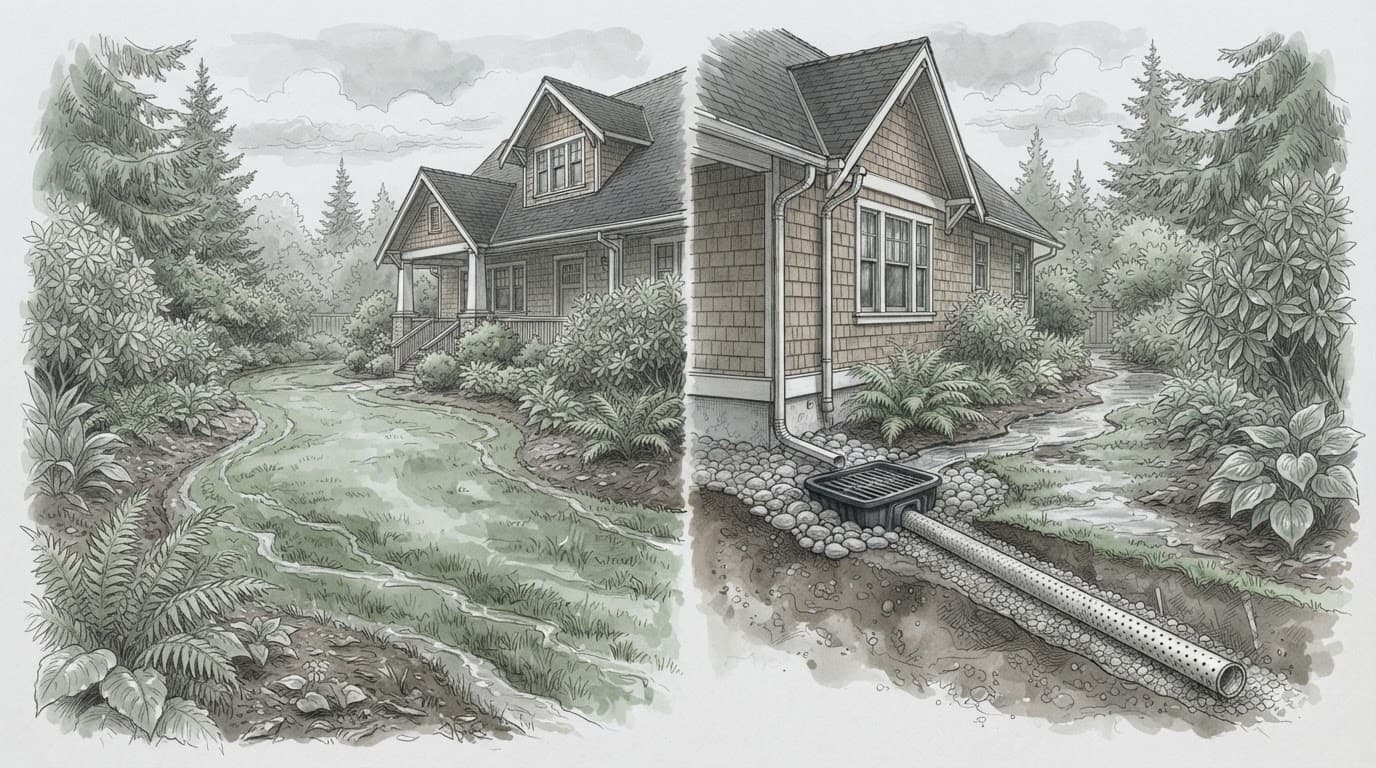
The right option depends on your soil, slope, water volume, available discharge location, and local requirements. A grade should move water away from the foundation without pushing it toward a walkway, neighbor, or another low spot. Likewise, a drain needs a safe and legal endpoint.
When Regrading the Lawn Can Solve Standing Water
Regrading works well for minor depressions and broad surface runoff. Adding and compacting suitable soil can restore a steady slope away from your home and correct areas that have settled over time.
However, grading will not fix groundwater, a high water table, downhill flow from another property, or roof leaders emptying beside the foundation. Poor planning can simply trade one puddle for another.
When a Drainage System Is the Better Long-Term Answer
A drainage system is a better fit when water must be intercepted or collected. French drains can intercept shallow seepage. Catch basins handle concentrated surface runoff, while downspout lines move roof water away from the house.
Dry wells and soakage trenches can absorb clean stormwater where soil conditions allow. Swales can guide broad sheet flow through a gentle, planted channel. Each option needs adequate slope, soil infiltration, maintenance access, and a compliant discharge plan.
A buried drain without a positive outlet or properly designed infiltration area can fill with sediment and stop working.
Match the Drainage Solution to the Source of Standing Water
Find where the water begins before choosing a fix. Watch the property during steady rain, then return several hours later. The pattern often reveals whether the problem comes from surface runoff, roof water, shallow seepage, or poor grading.
Many Portland yards need both approaches. For example, a regraded lawn may shed water toward a shallow swale, while a catch basin protects the low point near a patio.
Low Spots, Driveways, and Patio Runoff
A broad low spot in a lawn may only need regrading or a shallow swale if runoff spreads across the surface. The repair should create a consistent route for water without creating erosion.
Driveways and patios act differently because they concentrate water. In those areas, a catch basin and solid pipe can collect runoff before sending it to an approved endpoint. The basin must sit at the true low point and remain accessible for clearing leaves and debris. Still, a catch basin alone will not solve groundwater seepage.
Roof Runoff, Foundation Moisture, and Side-Yard Seepage
Downspouts should never dump roof water beside a foundation. Depending on the lot, the answer may be a longer downspout extension, a buried line to an infiltration feature, or a properly designed surface route.
A French drain may help intercept shallow seepage along a side yard, retaining wall, or uphill slope. Yet it needs a positive outlet or a suitable infiltration area. Without one, water can remain trapped in the trench and clog the system.
Dry Wells and Swales Need the Right Site Conditions
Dry wells work only when clean stormwater can soak into suitable soil. Portland guidance commonly calls for dry wells to sit at least 10 feet from a building and 5 feet from a property line, subject to applicable approvals and site conditions.
Swales also need enough width, gentle grades, stable overflow paths, and soil that can handle the water. Neither feature should be installed because it looks like an easy fix.
How to Choose a Safe, Lasting Yard Drainage Plan in Portland
Portland stormwater rules favor retaining and infiltrating runoff onsite to the maximum extent practicable, especially when a project adds or replaces hard surfaces. Dry wells and soakage trenches are regulated stormwater facilities, not simple landscaping features.
Only rainwater should enter storm drains. Connections to City systems, or changes to public or private stormwater facilities, can require written approval and permits.
Check the Water Source, Soil, Slope, and Outlet First
Before work begins, track the water source and inspect the yard during and after rain. Look at downspouts, erosion marks, damp foundation areas, and soil that stays soft for days.
A professional review helps prevent costly missteps, such as placing a dry well in soil that drains poorly or installing a French drain with nowhere for water to go. The plan should also account for utility locations, setbacks, cleanout access, and a safe overflow route.
Avoid Drainage Mistakes That Cause Repeat Ponding
Common failures include grading toward the home, directing water onto neighboring property, using undersized pipe, and burying drains without cleanouts. Sediment, roots, and leaves can also block a system that has no maintenance plan.
Moving water offsite is not always allowed or wise. Chozen Gardens evaluates the full path of water, then builds a drainage plan that addresses installation and long-term upkeep.
A Better Answer for a Wet Portland Yard
Use grading for small surface low spots and gentle runoff. Choose drainage when water is concentrated, persistent, underground, or tied to roofs and hard surfaces.
The yard grading vs. drainage systems decision often leads to a combined solution. Portland-area and Washington County homeowners can contact Chozen Gardens for a professional drainage assessment and dependable yard improvements that keep water moving where it should.