
Common Fence Repair Problems and When Replacement Makes More Sense
A loose board or dragging gate can look like a small weekend fix. Sometimes it is. Other times, it's the first sign that your wood fence has bigger trouble under the surface.
This guide helps you spot the difference between a repairable issue and a fence that's wearing out as a whole. If the damage looks widespread, or you're not sure what you're seeing, Chozen Gardens can give you a clear, honest opinion before a minor problem turns into a costly one.
The fence repair problems homeowners see most often
Most fence trouble starts in places you can spot without tools. You don't need to be a contractor to notice soft wood, leaning posts, or hardware that won't stay tight. What matters is whether the damage is isolated, or showing up all along the fence line.
Rot, soft spots, and water damage near the posts
Rot usually shows up first near the bottom of boards and around posts, where water sits the longest. Dark staining, a musty smell, and wood that feels soft are common clues. If a screwdriver sinks easily into the wood, the damage is no longer surface-deep.
Small areas of rot can sometimes be cut out, treated, and repaired. But if several posts or pickets feel spongy, the fence may be breaking down from the inside, and a patch won't hold for long.
Leaning sections and loose fence posts
A fence rarely starts leaning for no reason. Wet soil, shifting ground, and weak footings can loosen a post over time. In Oregon, rain and poor drainage often speed that process up.
One wobbly section may only need one post reset or replaced. Still, if the whole fence line is tilting, or multiple posts move when you push on them, the structure is failing, not just one panel.
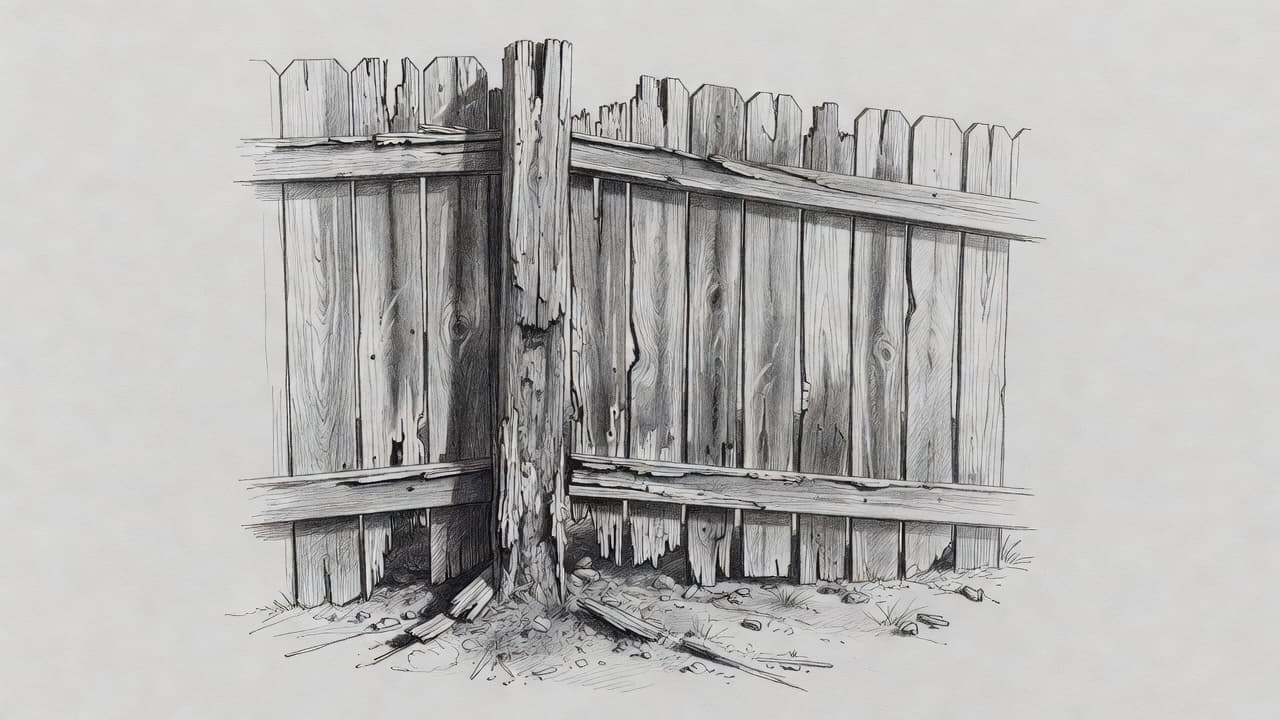 ### Split boards, warped pickets, and missing panels
Sun, age, moisture, and impact damage can all crack or twist fence boards. One split picket isn't a big deal. A few replacement boards can usually restore the look and strength of the section.
The picture changes when warping shows up everywhere. Once many boards bow, twist, or pull apart, the fence starts looking uneven, and privacy drops fast. Gaps also make it easier for pets to slip out and for wind to push harder on weak sections.
Loose fasteners, sagging rails, and gate problems
Popped nails, rusted screws, and sagging rails often show up in older fences. Gates tell the story too. If a gate drags, won't latch, or keeps dropping after adjustment, the frame or nearby posts may be shifting.
New hardware can fix a lot, especially if the wood is still solid. Corrosion-resistant screws, including 304 stainless or GRK R4 style fasteners, hold better than old nails. But if screws keep pulling loose, the wood may no longer have enough strength for a lasting repair.
How to tell when fence repair is no longer the smart choice
A fence doesn't have to be completely fallen over to be a replacement job. The better question is simple: are you fixing one problem, or chasing the same problem across the whole yard?
When damage is spread across the whole fence, not just one spot
If rot, leaning, splitting, and loose parts show up in several places at once, the fence is usually past simple patching. Replacing one board here and one post there can feel cheaper at first, but the bills add up fast when every section needs attention.
This quick comparison helps:
| Condition | Better choice |
|---|---|
| One or two damaged boards | Repair |
| One failed post in an otherwise solid fence | Repair |
| More than 20 to 30 percent damaged | Replace |
| Multiple failed posts or widespread soft wood | Replace |
If more than 20 to 30 percent of the fence is damaged, replacement usually costs less than repeated patchwork repairs.
When repair costs are close to replacement costs
Labor is where fence repairs pile up. Replacing posts, rails, pickets, and hardware across several sections can push the total close to a brand-new installation. When that happens, spending the extra money for a full replacement often buys you a longer life and fewer headaches.
Age matters too. Cedar fences often last 15 to 30 years, while pressure-treated pine may last about 20 years with regular care. If your fence is already near the end of that range, a big repair may only buy a little time.
When the fence no longer does its job
Looks matter, but function matters more. If your fence no longer gives privacy, won't keep pets contained, or feels insecure around a gate or property line, it has stopped doing the job you built it for.
That's often the tipping point for replacement. A fence can still have a few decent-looking panels and still fail where it counts most.
What to do next if you are unsure whether to repair or replace
A quick walk around the yard can tell you a lot before you call for help.
A simple homeowner checklist before you decide
Check these problem areas as you inspect the fence:
- Press on posts and rails to see if they move.
- Look for soft wood, dark stains, and musty odor near the base.
- Count how many boards are split, warped, or missing.
- Test the gate to see if it swings, latches, and stays level.
Don't focus on one damaged board alone. Step back and look at how many areas show the same issue, because a pattern usually matters more than one bad spot.
Why a professional fence inspection can save time and money
Hidden damage is easy to miss. Posts can rot below grade, rails can loosen from the inside, and drainage problems can keep feeding the same failure year after year. A trained eye can spot whether the fence needs a targeted repair or a full reset.
Chozen Gardens helps homeowners in Hillsboro, Beaverton, Aloha, Washington County, and nearby Portland-area communities make that call with confidence. Because the team handles wooden fencing, drainage, and other outdoor structural work, they can look at the whole problem, not only the broken board in front of you. If your fence damage is hard to judge, getting a quote now can save money later.
Conclusion
Small fence problems can often be repaired. Widespread rot, leaning sections, repeated hardware failure, and multiple bad posts usually point to replacement instead.
If your fence is starting to feel like one fix after another, it's time for a straight answer. Chozen Gardens can inspect the damage, explain your options clearly, and recommend the next step that makes the most sense for your property.