
How Retaining Walls Help Prevent Soil Erosion on Sloped Properties
A sloped yard can lose soil one storm at a time. Rainwater runs downhill, grabs loose dirt, and leaves behind bare patches, muddy runoff, and damaged landscaping.
Around Hillsboro, Beaverton, and Aloha, long wet stretches can speed that damage up. A well-built retaining wall does more than improve curb appeal, it holds soil in place, slows runoff, and gives your landscape a better chance to stay put. First, it helps to see why slopes wear down so quickly.
Why sloped properties lose soil so quickly
Gravity is always pulling soil downhill. When rain hits a slope, that pull gets stronger because moving water carries fine particles, mulch, and topsoil with it.
Steeper, barer slopes usually erode faster. They have less root mass to anchor the surface, and they give water a cleaner path to run. Clay-heavy ground can make the problem worse because water often skims across it instead of soaking in.
How rainwater turns a slope into a washout
Water on a hill acts less like a soak and more like a sheet in motion. As it moves, it picks up speed, cuts narrow channels, and strips away the loose layer that plants need.
That damage tends to build on itself. Once a small rut forms, the next storm follows the same path, deepens it, and carries even more soil downhill. Cleaning up the mud helps the symptom, but it doesn't fix the slope.
Warning signs your yard is already eroding
Most yards show clues before a slope gives way. If you notice any of these, the ground is already shifting:
- Exposed roots near shrubs, trees, or lawn edges
- Ruts or gullies after hard rain
- Mud collecting beside walkways, patios, or driveways
- Leaning plants, sliding mulch, or bare patches on the hill
- Pooled water at the base of the slope or near the house
In western Oregon, winter rain often reveals these issues fast. If the same spots keep washing out, the yard usually needs more than fresh mulch or replanting.
How retaining walls stop erosion and stabilize the hillside
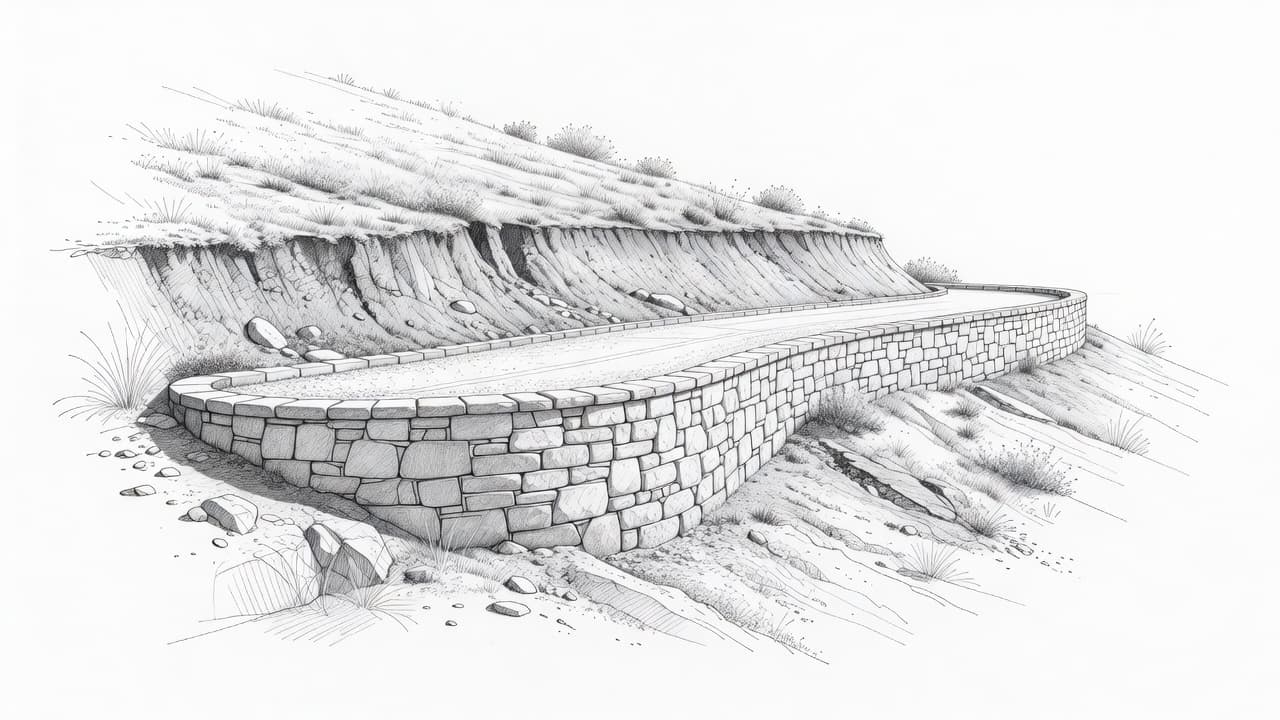
Retaining walls work because they change the shape of the slope. Instead of one long incline that sheds water, the wall creates a supported edge and a smaller, more stable soil area behind it.
 ### Holding back soil so it doesn't slide downhill
At the most basic level, the wall is a barrier on the downhill side of the slope. It resists the sideways pressure of the soil behind it and keeps that soil from slipping during heavy rain.
A proper wall also starts with a strong base. Builders usually set it in a compacted gravel trench, which helps the structure stay level and drain better. By flattening the angle behind the wall, less exposed soil is left for rain to attack.
Once a slope gets past about 50 percent, lawn alone often isn't enough. At that point, a structural fix is usually the safer choice.
Terracing the slope to slow runoff
Retaining walls can also turn one steep area into several flatter steps. That terraced layout breaks the downhill flow into shorter sections, so water loses speed before it can carve into the soil.
The yard becomes easier to use, too. Those flatter sections can hold shrubs, raised beds, or a path, and they tend to keep mulch and compost where you put them. In other words, the wall controls erosion while making the space more usable.
Why drainage behind the wall matters just as much
Drainage is part of the wall, not an extra feature. Without it, water builds behind the structure, saturates the backfill, and pushes outward with damaging pressure.
A retaining wall without drainage is often a short-term wall.
Good construction usually includes crushed gravel behind the wall, a perforated drain pipe near the base, and weep holes or outlets so water can escape. Many contractors also use geotextile fabric to keep native soil from clogging that gravel. Without those pieces, even an expensive wall can crack, lean, or bulge after a wet season.
Choosing the right retaining wall for your slope
No two slopes behave the same. Wall height, soil type, water flow, access, and appearance all affect the design.
Budget matters, too. Residential retaining walls often fall somewhere between $3,000 and $10,000, depending on height, drainage work, materials, and site difficulty. A cheap wall in the wrong place can cost more when it has to be rebuilt.
Common materials and where each one works best
Material choice affects strength, lifespan, and maintenance. This quick comparison helps:
| Material | Best fit | Trade-offs |
|---|---|---|
| Timber | Short garden walls and lower-cost projects | Shorter lifespan in wet soil |
| Concrete block | Most residential erosion-control walls | Needs a solid base and drainage |
| Natural stone | Custom landscapes and curved beds | Higher cost and skilled install |
| Poured concrete | Taller walls and heavy loads | More engineered, plainer look unless finished |
Large gravity-block systems, such as Redi-Rock, are another option for taller walls that need extra mass. For many homes, concrete block offers the best mix of strength, price, and appearance.
When a professional design is the safer choice
Short decorative walls are one thing. Taller walls, steep slopes, weak soil, and recurring drainage problems are another.
That's when it makes sense to call a licensed, bonded, and insured company like Chozen Gardens. They can assess the grade, runoff, drainage patterns, and landscaping around the slope, then recommend a wall that fits the property and not a one-size-fits-all guess.
Other erosion control steps that make retaining walls work even better
A wall works best when the rest of the yard stops feeding water into the problem. Most long-term fixes combine hardscape, drainage, and planting.
Plants and ground cover that help hold soil in place
Roots help knit soil together. Ground cover, low-maintenance shrubs, and climate-suited planting soften the impact of rain and fill the gaps where runoff starts.
Around western Oregon, native or well-adapted plants usually need less water and less upkeep. On gentler slopes, a 3 to 4 inch mulch layer can also reduce splash erosion if it is held in place. Drip irrigation is often a better choice than spray on slopes because it waters the root zone without sending extra water downhill.
Drainage solutions that keep water moving away from problem areas
Water needs a path away from the hill. French drains, downspout extensions, swales, and proper grading all reduce how much runoff reaches the slope in the first place.
That matters because even a strong wall works harder when a gutter dumps water behind it. Chozen Gardens handles drainage and landscaping together, which helps reduce the odds of erosion returning after the wall is built.
A stable slope starts with the right plan
Rain will always move downhill, but it doesn't have to take your yard with it. A good retaining wall holds soil in place, slows runoff, and relieves water pressure so the slope stays stable through wet weather.
If your property in Hillsboro, Beaverton, Aloha, or anywhere in Washington County is showing signs of washout, contact Chozen Gardens for an assessment and quote. They can look at the grade, drainage, and planting needs, then recommend a practical fix that protects your landscape for the long run.