How to Protect Trees During Construction and Landscaping Projects
A tree can look untouched after a project while its root system has already suffered lasting harm. Knowing how to protect trees during construction and landscaping projects matters because roots need loose soil, oxygen, and water to keep the canopy healthy.
Grading, trenching, patio work, and equipment traffic can damage roots without leaving obvious marks. Problems may surface months or even years later. A solid plan, sturdy fencing, and local arborist guidance from Chozen Gardens can protect valuable trees across Washington County and greater Portland.
How to Protect Trees During Construction and Landscaping Projects
Tree protection starts before clearing, grading, driveway work, patios, fencing, or utility trenches begin. Walk the property with your contractor and identify every tree worth preserving.
Mature trees can decline after roots are torn, soil becomes compacted, fill covers the root area, or branches break under equipment. Keep the work plan outside protected areas whenever possible, rather than trying to repair damage after the fact.
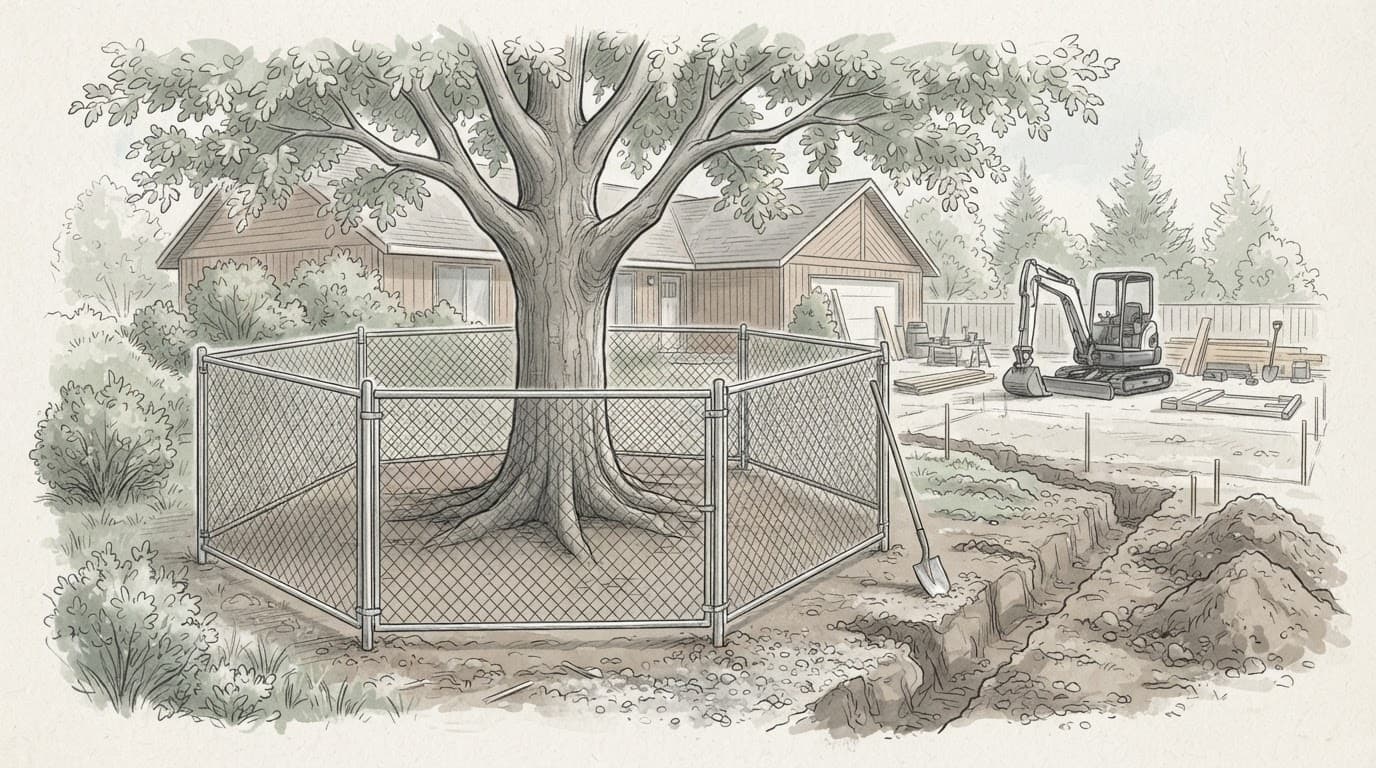
Measure the tree's root protection zone before work starts
Portland's prescriptive planning rule sets the root protection zone at a radius of about 1 foot for every inch of trunk diameter. Measure trunk diameter at breast height, often called DBH.
For example, a 12-inch DBH tree needs a 12-foot radius protection zone measured from the trunk. Roots often extend beyond the visible canopy, so the drip line alone is not a reliable boundary.
Local requirements can differ by city and project type. Confirm current permits and tree rules before work begins.
Fence the protected area and keep work outside it
Caution tape tears, gets moved, and doesn't stop a skid steer. Portland commonly requires a 6-foot chain-link construction fence secured with 8-foot metal posts. Install it before ground disturbance and leave it up through final inspection.
Keep vehicles, equipment, soil piles, fuel, debris, and building materials outside the fence. A visible "Tree Root Protection Zone" sign helps every crew member recognize the boundary. In some Portland situations, an existing secured fence or approved temporary fencing may qualify.
Prevent Soil Compaction, Fill, and Root Damage Around Existing Trees
Heavy equipment and repeated foot traffic press soil particles together. As air spaces disappear, roots struggle to absorb oxygen and water. Added soil creates another problem because it can bury feeder roots and trap moisture against the trunk.
Before construction starts, move access routes away from established trees. Put gravel, lumber, concrete forms, and excavated soil in a designated storage area outside the protection zone. If a patio or fence line conflicts with a tree, changing the design is often cheaper than replacing a damaged mature tree.
Chozen Gardens can review tree locations alongside drainage, fencing, concrete patio, and landscaping plans. That early coordination helps homeowners improve the yard without sacrificing the trees that give it shade and character.
A single day of equipment traffic can compact soil that roots need for years.
Create a safe route when equipment must cross the root zone
The safest choice is to keep all traffic out of the root protection zone. When approved access cannot be avoided, temporary bridging can spread the load.
Portland examples include a 1/2-inch steel plate over at least 2 inches of mulch, or 3/4-inch plywood over at least 4 inches of mulch. The project arborist or local authority should approve the method first. Protective layers reduce harm, but they do not make unlimited traffic safe.
Use careful excavation and clean root cuts near trees
Utilities, irrigation, drainage, retaining walls, and fence posts can all cut through roots. Change the route when possible. Otherwise, hand-dig or use air spading to locate roots before excavation near important trees.
Never rip roots out with a backhoe. If a cut is unavoidable, use sharp tools to make a clean cut and avoid roots larger than 4 inches when possible. Cover exposed roots promptly with soil or mulch so they don't dry out. Call an ISA Certified Arborist for major roots or high-value trees.
Know when permits and arborist approval are required
Rules depend on the tree's location, species, size, and the kind of work planned. Under Portland's prescriptive standards, new encroachment generally must stay below 25% of the remaining root protection zone and cannot come closer than one-half of the zone radius.
Public trees have added restrictions. Portland code includes a 20-foot rule for excavation near public trees without written permission from the city arborist. Review Portland Title 11 or your local jurisdiction before digging, since Portland rules do not apply statewide.
Help Trees Recover After Construction and Landscaping Work
Don't remove protection fencing until the project is complete. Then inspect the area for exposed roots, soil piled against the trunk, broken limbs, and drainage changes that may affect the tree.
Root injury often has delayed symptoms. Sparse leaves, early leaf drop, slow growth, and dead branches may appear long after the crew leaves. Chozen Gardens provides tree risk assessments, pruning, pest and disease management, drainage solutions, and landscape work that protect both trees and property.
Inspect for damage and adjust watering without overwatering
Water needs depend on species, season, weather, soil type, and the amount of root disturbance. Ask an arborist for a site-specific watering plan after trenching or grading instead of following a universal schedule.
Mulch can hold moisture and moderate soil temperature. Keep it away from the trunk, however, and never bury the trunk flare or pile mulch against the bark.
Protect the Tree Before the First Machine Arrives
To protect trees during construction and landscaping projects, mark the root protection zone, install strong fencing, and keep equipment and soil outside it. Use careful excavation methods when work must happen nearby.
Protecting an established tree is usually less costly than managing decline or removal later. Oregon homeowners can contact Chozen Gardens before work begins for a careful assessment and coordinated yard improvements from a licensed, bonded, and insured team.