
Tree Root Damage: Signs, Causes, and How to Protect Your Property
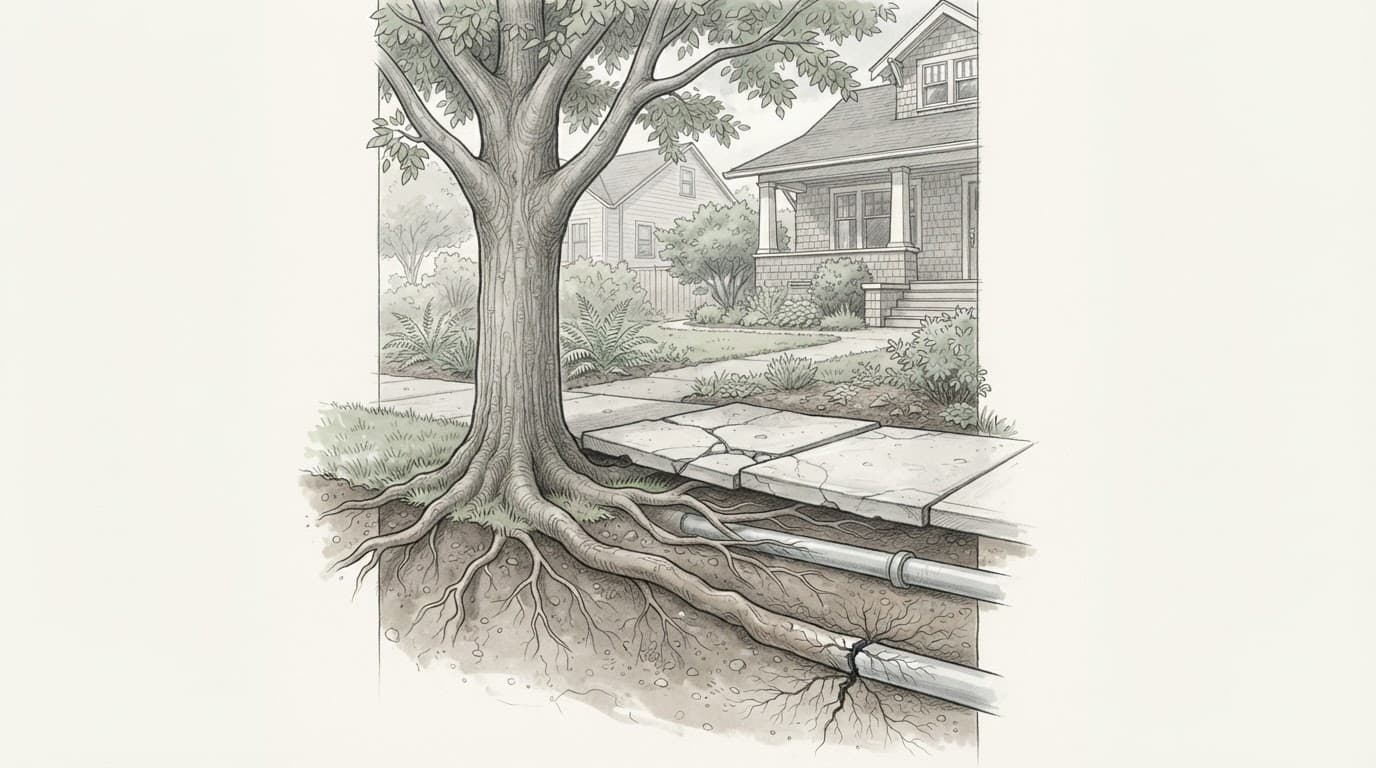
A raised sidewalk panel, a slow drain, or a fresh crack near the house can make any homeowner worry about tree root damage. The problem is real, but roots usually lift pavement, enter existing pipe gaps, or change soil moisture near shallow foundations. They rarely punch through sound concrete or intact pipe.
For Portland metro and Washington County homes, the right response starts with an accurate diagnosis. Chozen Gardens is a licensed, bonded, and insured local company that can assess tree and property risks before a small concern becomes an expensive repair.
Tree Root Damage: Signs, Causes, and How to Protect Your Property
Roots need water, oxygen, and space. When a large tree grows near compacted soil, curbs, sidewalks, or buried utilities, its roots may spread close to the surface.
That pressure can shift concrete over time. However, a cracked slab or drain backup does not automatically prove roots are responsible. Settling soil, poor drainage, aging pipe, and construction issues can create similar symptoms.
Watch for patterns around pavement and plumbing
Walk your property after rain and during dry weather. Look for sidewalk or patio slabs that have lifted, separated, or tilted near a tree trunk. Cracks that widen near surface roots deserve attention, especially where they create a trip hazard.
Inside the home, repeated slow drains, toilet gurgling, or backups may point to a sewer-line problem. Outdoors, a strip of unusually lush grass or soft soil above the sewer route can also signal a leaking line. A sewer camera inspection can confirm whether roots entered through a failed joint or crack.
Roots usually exploit an opening that already exists in a sewer pipe. Replacing or repairing the damaged section often matters as much as managing the nearby tree.
A leaning tree, new dieback in the canopy, leaf scorch, or mushrooms near the trunk base may indicate root stress. Those signs call for an arborist's evaluation, not a quick trim.
Why root conflicts develop
Sidewalks and curbs restrict soil volume. Portland's street-tree guidance notes that compacted soil and limited growing space make concrete conflicts likely as roots expand. Large, fast-growing trees planted close to pavement face the highest risk.
Foundation issues work differently. In drought-prone periods, roots can draw moisture from shrink-swell soil. That soil may contract near a shallow foundation, which can contribute to settlement cracks. Direct root damage to foundations is far less common.
Tree root damage also becomes more likely when a sewer pipe has many joints, poor connections, or age-related defects. Before anyone cuts roots, identify the actual source of the conflict.
How to Protect Your Home From Tree Root Damage
Start with the cause, then protect the utility, the tree, and the structure. Cutting visible roots without a plan can reduce water uptake, invite decay, and make a mature tree less stable.
Confirm the source before changing the tree
Arrange a sewer scope if drains are backing up. Have a qualified arborist inspect the tree's species, size, root flare, canopy health, and distance from concrete or utilities. Chozen Gardens can help property owners understand where roots are likely affecting a site and when another trade, such as a plumber, should inspect first.
Call 811 before digging near utility routes. Oregon homeowners should also check for overhead lines before pruning or removing a tree. If branches touch a high-voltage line, contact the utility provider rather than attempting any tree work.
Preserve tree health while reducing risk
Avoid deep trenching, soil compaction, and heavy equipment inside the root zone. Concrete and asphalt already limit rainfall reaching roots, so extra damage around the base can stress an established tree.
Targeted root pruning may be appropriate in limited situations, but it requires judgment. Removing large structural roots can weaken a tree and raise its chance of failure in wind or saturated ground. An arborist can weigh the tree's condition against the safety issue and recommend pruning, monitoring, removal, or a different repair path.
For new landscaping, keep large-maturing trees well away from sewer lines, driveways, patios, and shallow foundations. More growing room now prevents many costly conflicts later.
Select Repairs and Handle Portland Permits
Once the cause is confirmed, choose a repair that addresses both the property and the tree. A plumber may repair or replace a defective sewer section. Concrete contractors can reset or replace lifted slabs, while an arborist manages roots and evaluates the tree's stability.
Portland homeowners should not treat root-lifted sidewalks as a casual DIY excavation. The Portland Bureau of Transportation generally requires a sidewalk permit for repair projects, and Portland Urban Forestry may require a root-pruning permit. Report a hazardous city sidewalk condition to PBOT at 503-823-1711.
Match the repair to the long-term problem
A small root conflict may allow for careful pruning and concrete repair. Where pipe failure keeps recurring, replacing the damaged line section may solve the plumbing problem without severe root cutting.
If a tree has major structural defects, extensive root loss, or dangerous lean, removal may be the safer choice. Chozen Gardens can provide risk assessments, professional pruning or removal, stump grinding, drainage work, and outdoor repairs that fit the condition of the property.
Protect the Property Without Sacrificing the Tree
Early attention gives you more choices. Watch for lifted concrete, repeat plumbing symptoms, soil movement, and changes in tree health, then confirm the cause before disturbing roots.
A well-planned response can limit concrete repairs, pipe damage, tree decline, and safety concerns. Portland metro and Washington County homeowners can contact Chozen Gardens for a professional assessment, root-conflict planning, pruning, removal, stump grinding, drainage solutions, and related outdoor improvements.